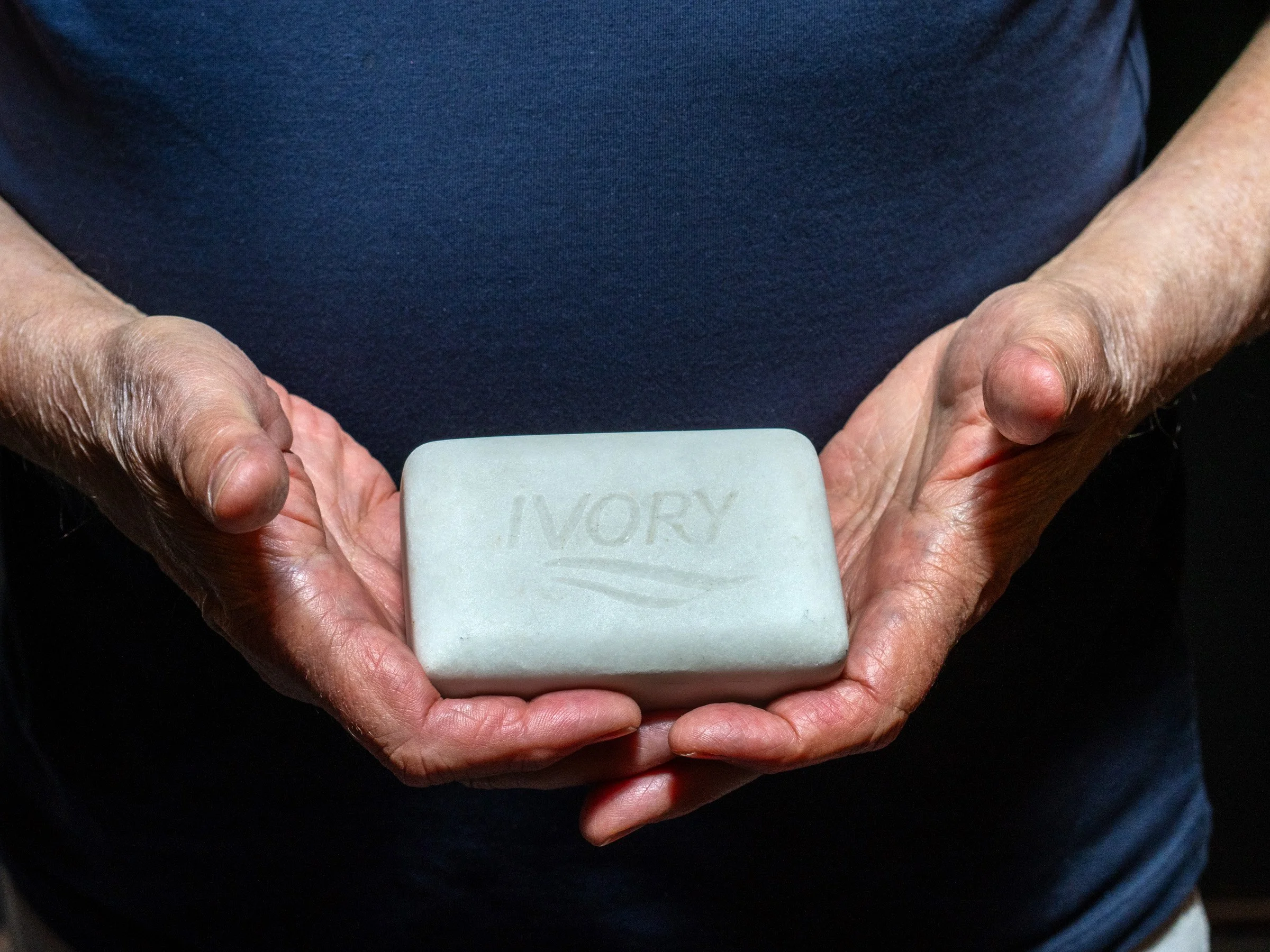
Larry Wheeler & Don Doskey
•
Chapel Hill, North Carolina
•
Larry Wheeler & Don Doskey • Chapel Hill, North Carolina •
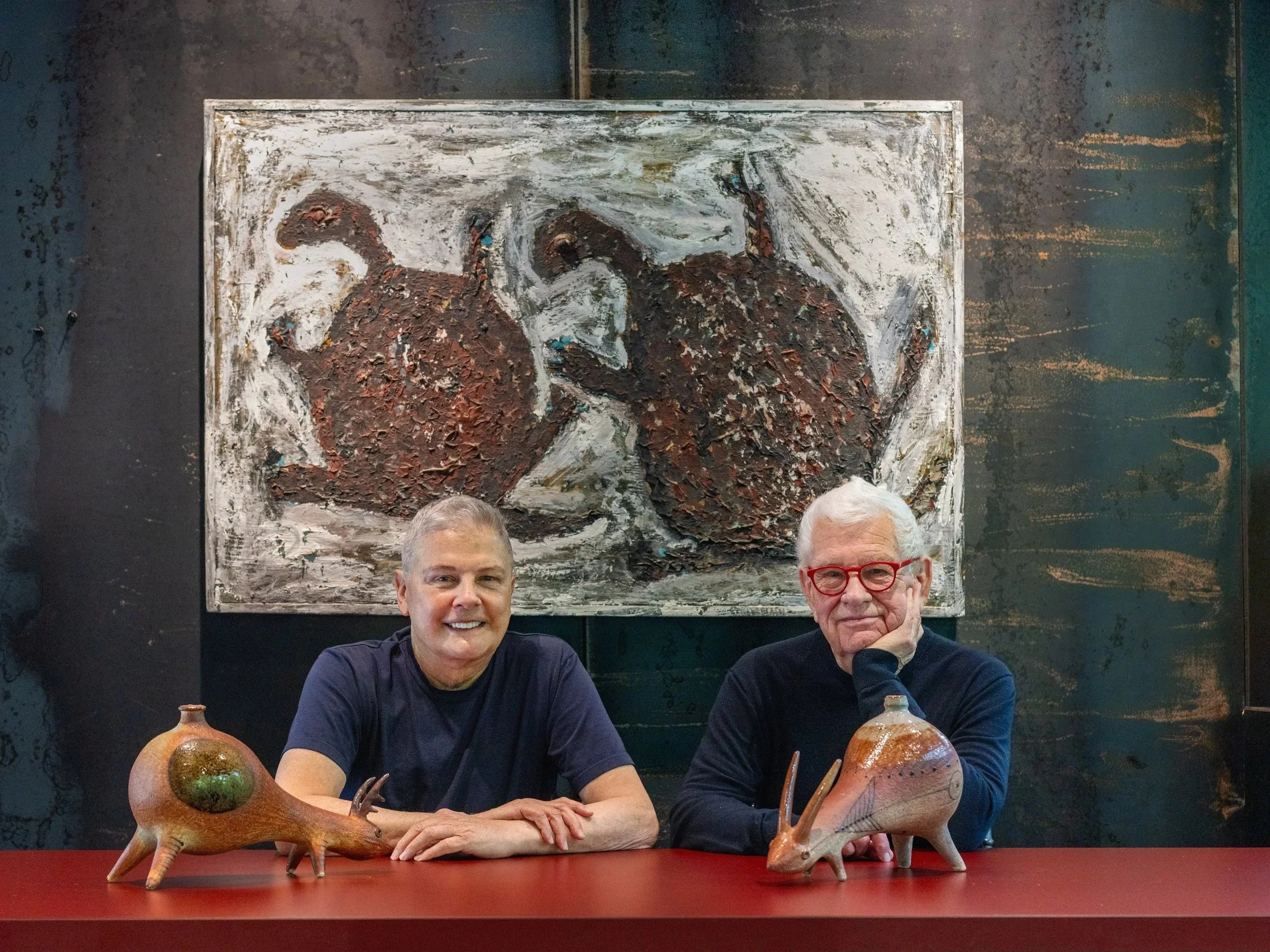
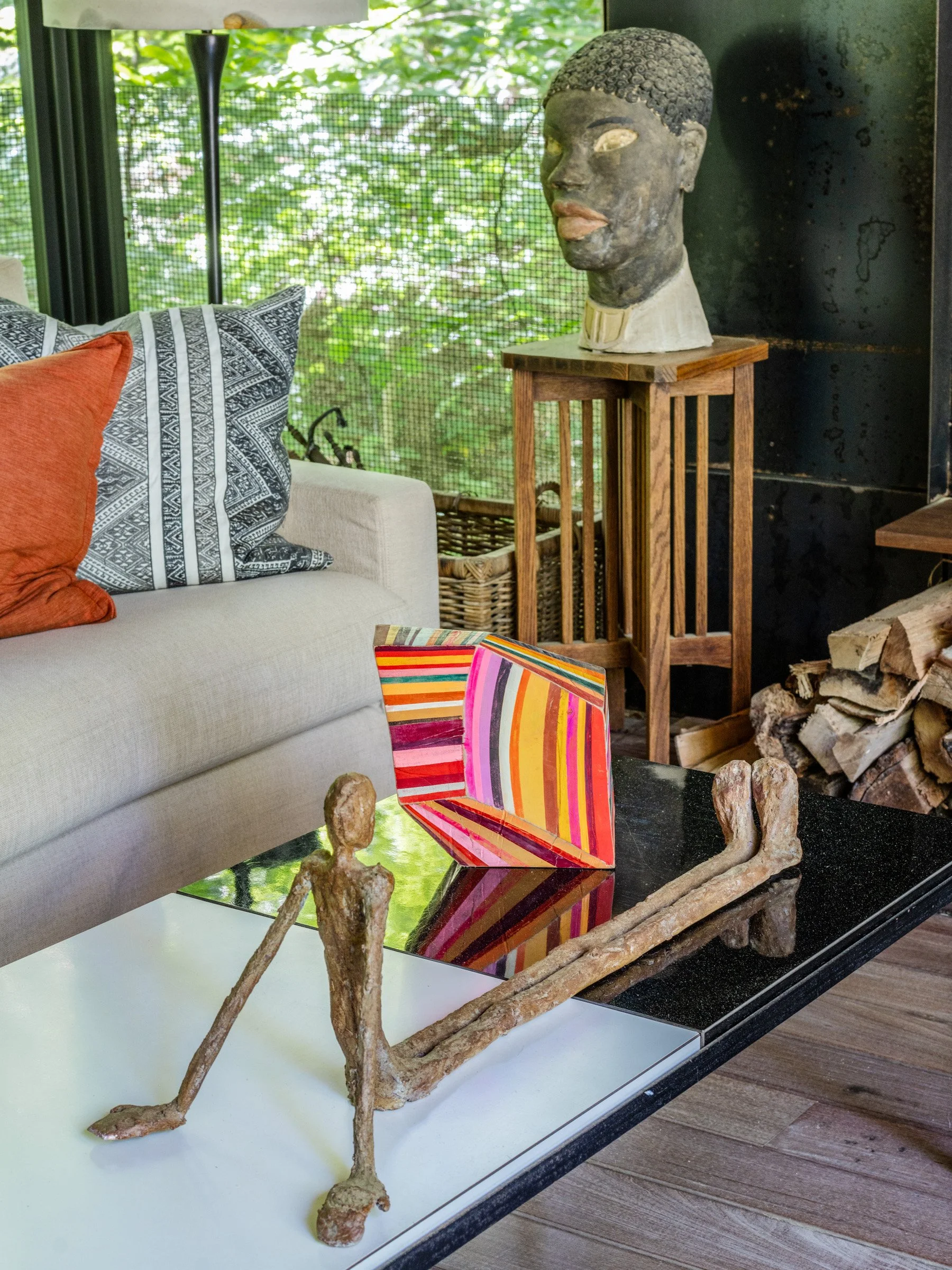
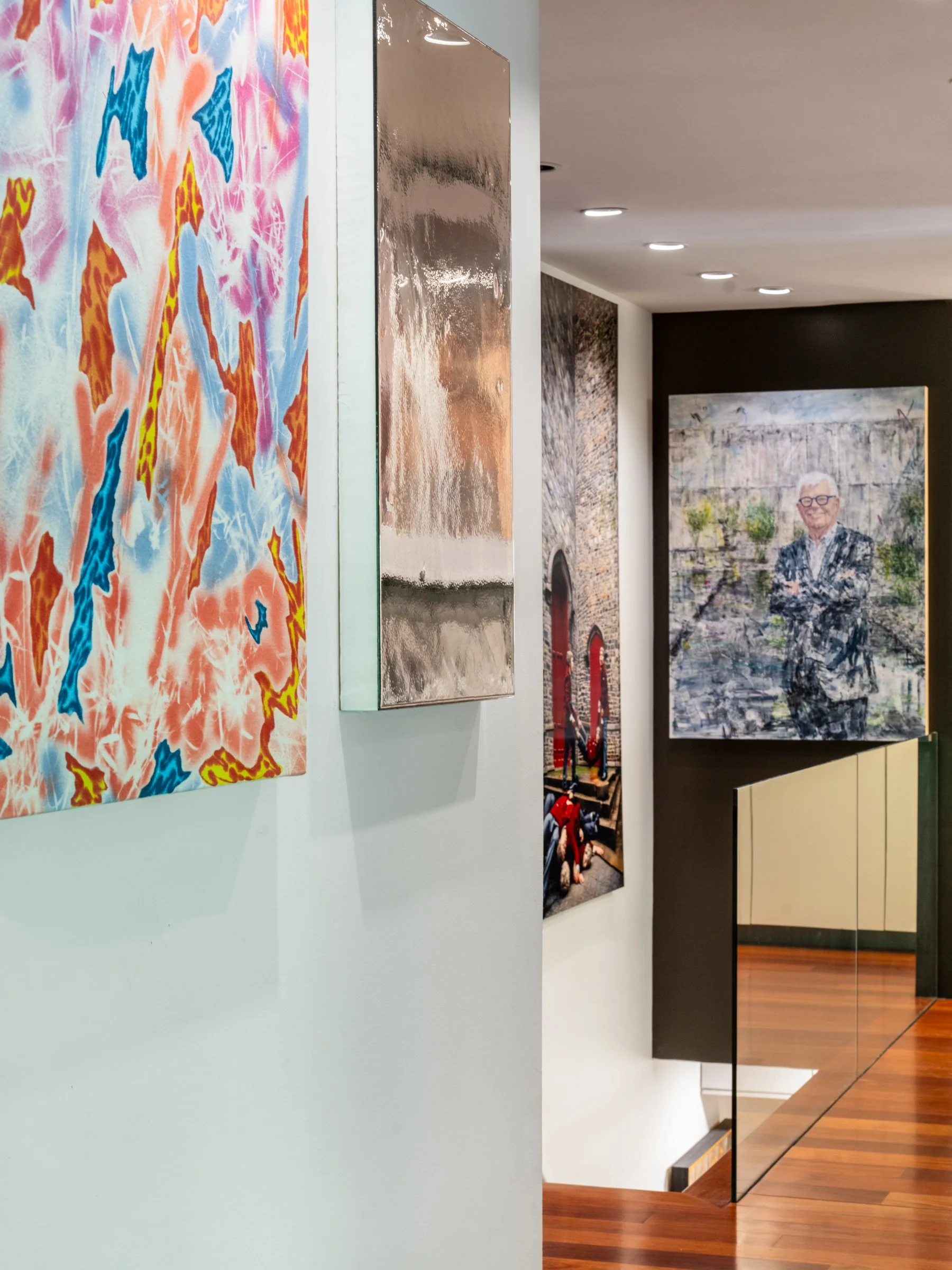
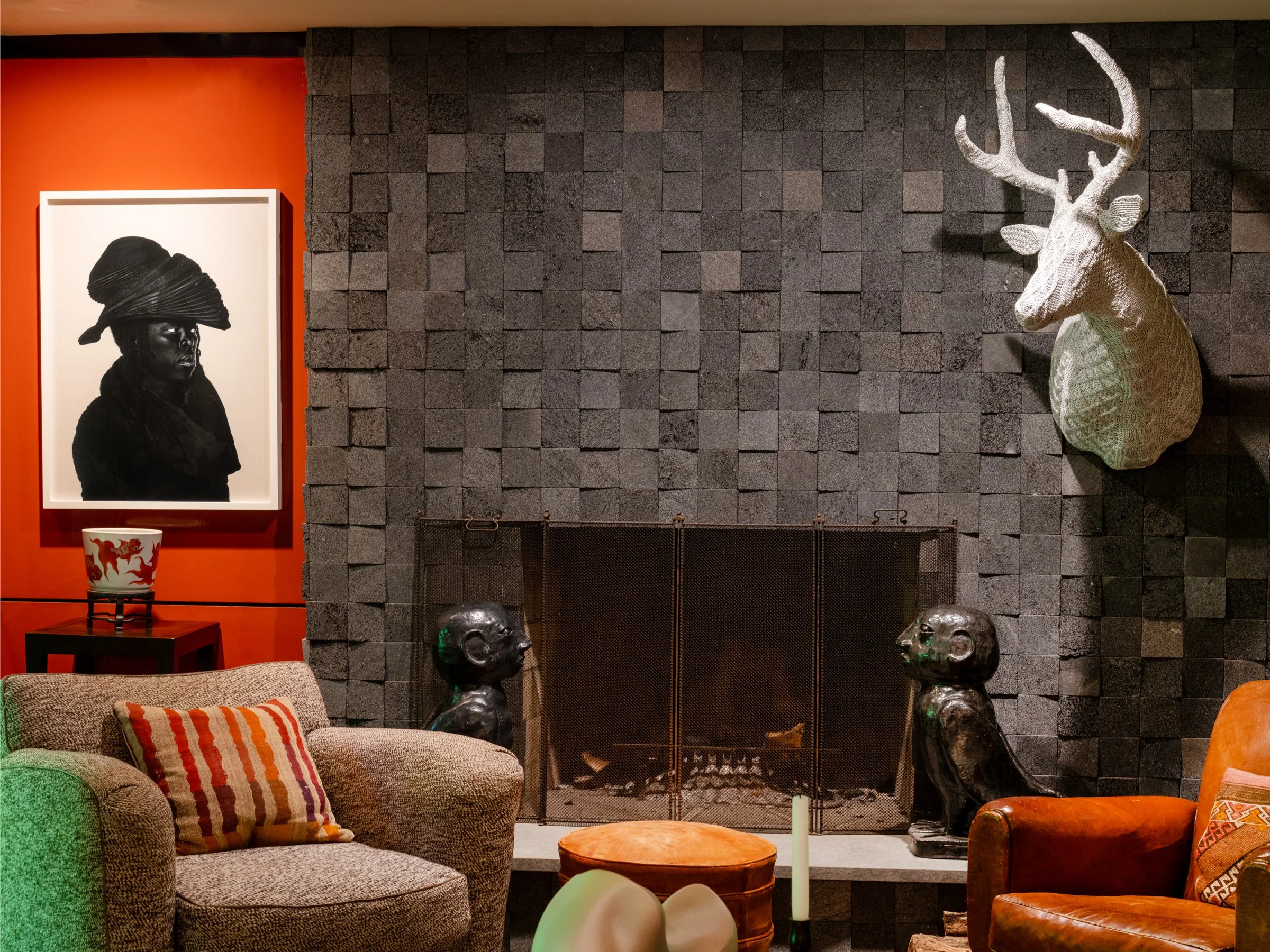
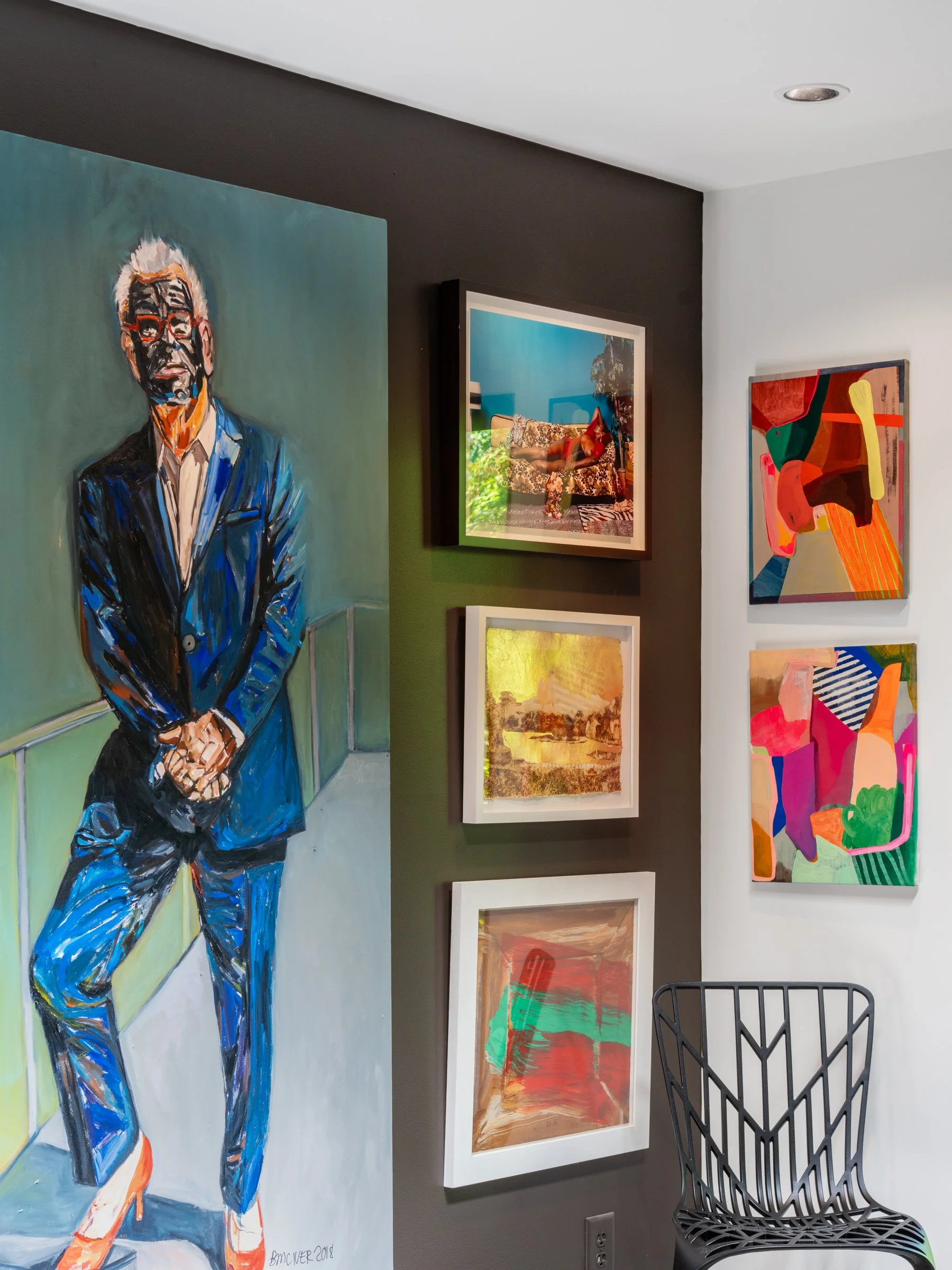
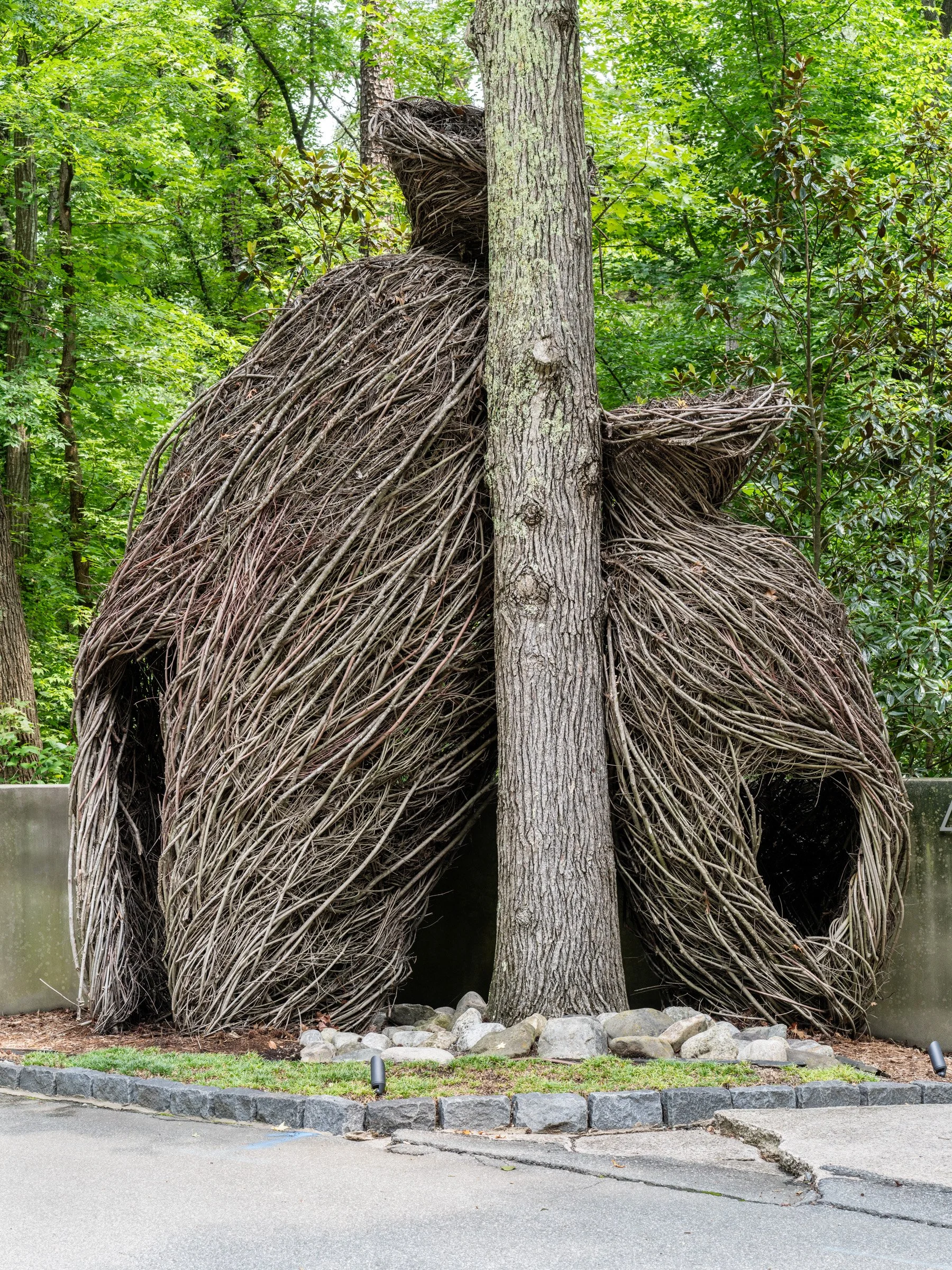
Larry and Don have assembled a collection that is at once personal and expansive, bringing together regional, national, and international voices. Among the artists represented are Josef Albers, Patrick Dougherty, Jaume Plensa, Damian Stamer, Donald Sultan, Alex Prager, Stacy Lynn Waddell, Kenneth Bennett Shipman, Peter Oakley, Dan Gottlieb, Carolyn Janssen, Zanele Muholi, Beverly McIver, and Anthony Goicolea.
What emerges is more than a collection of individual works. It is a portrait of two collectors whose curiosity, experience, and shared aesthetic have shaped a deeply personal environment—one in which art is not simply displayed, but lived with.
Artsuite is honored to share Larry and Don’s collection and to invite you into the conversation behind it.
For more than two decades as director of the North Carolina Museum of Art, Dr. Larry Wheeler helped transform the Museum into an institution of international stature. His expansive vision brought major exhibitions and significant acquisitions to North Carolina, while his enduring commitment to public access reflected a fundamental belief: that exceptional art should be experienced not by a select few, but by everyone. His tenure was distinguished by landmark exhibitions such as Monet and Rodin and by acquisitions that brought works by artists including Yayoi Kusama, Robert Rauschenberg, Helen Frankenthaler, Jasper Johns, Richard Diebenkorn, Sean Scully, and El Anatsui into the Museum’s collection.
Don Doskey brings a similarly discerning eye to the world of design. As an interior designer and tastemaker, he is known for creating spaces in which architecture, nature, color, furnishings, and art are brought into a precise yet inviting balance. His interiors are contemporary without being austere, and deeply considered without sacrificing the pleasures of everyday living.
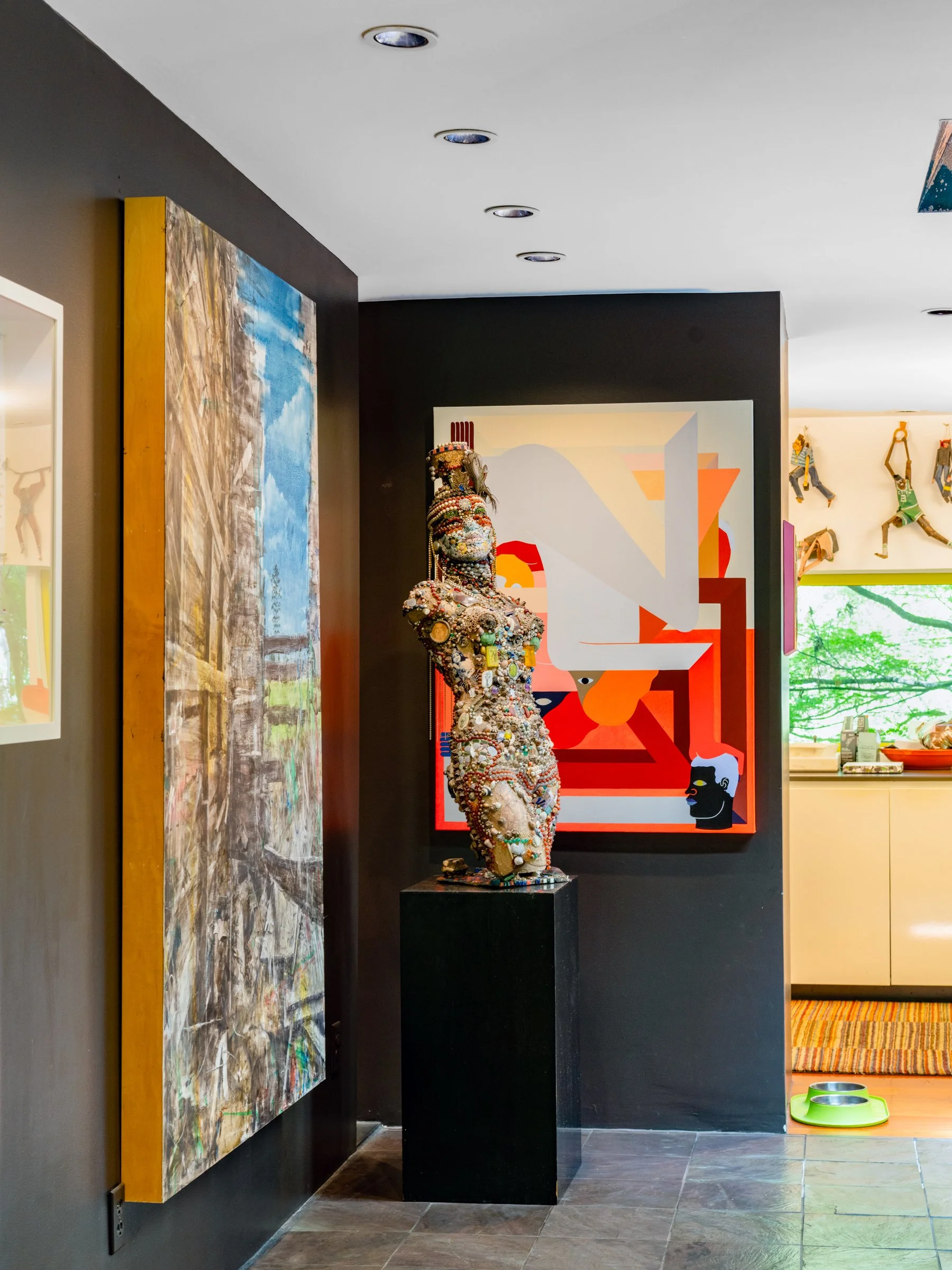
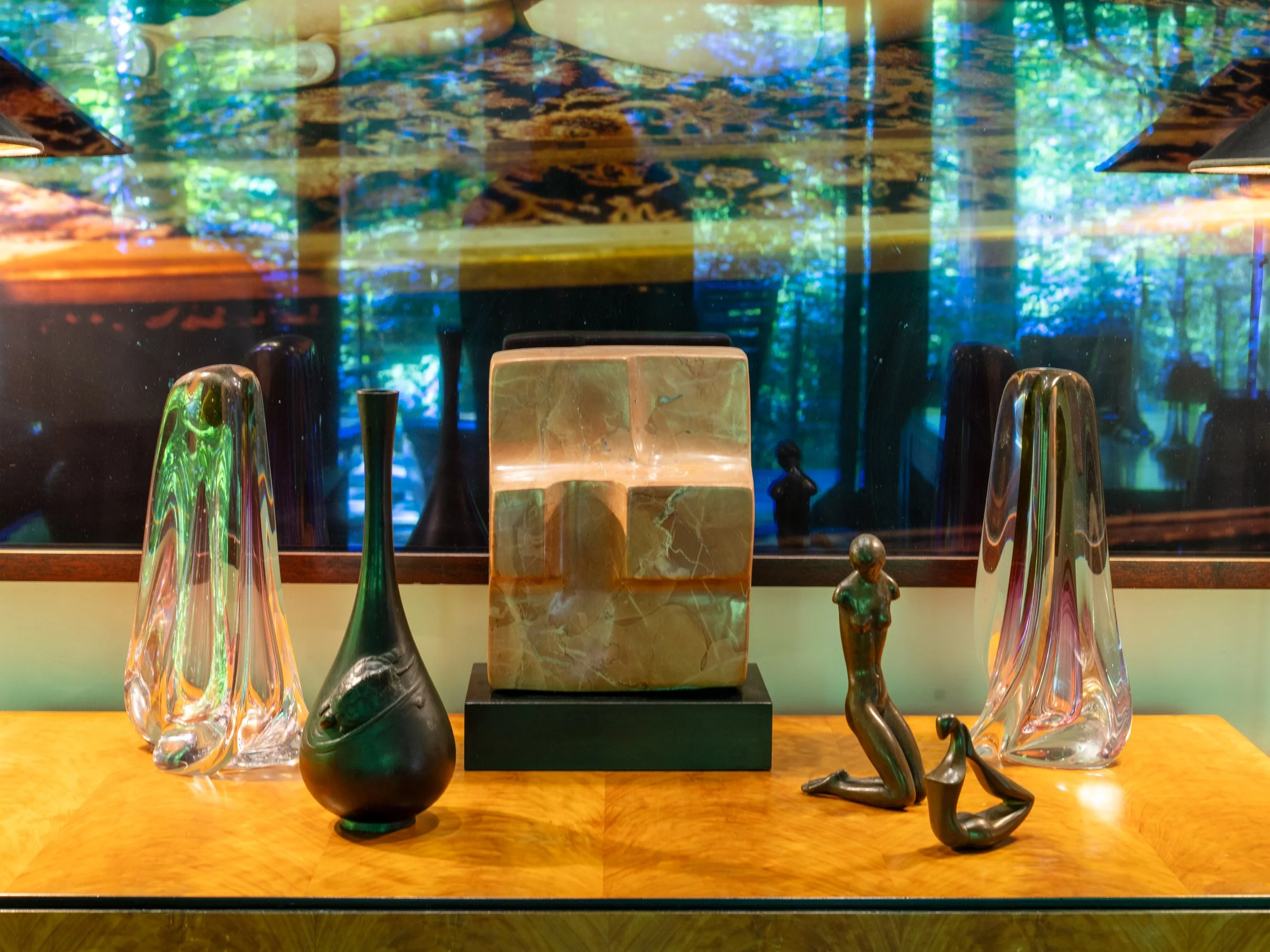
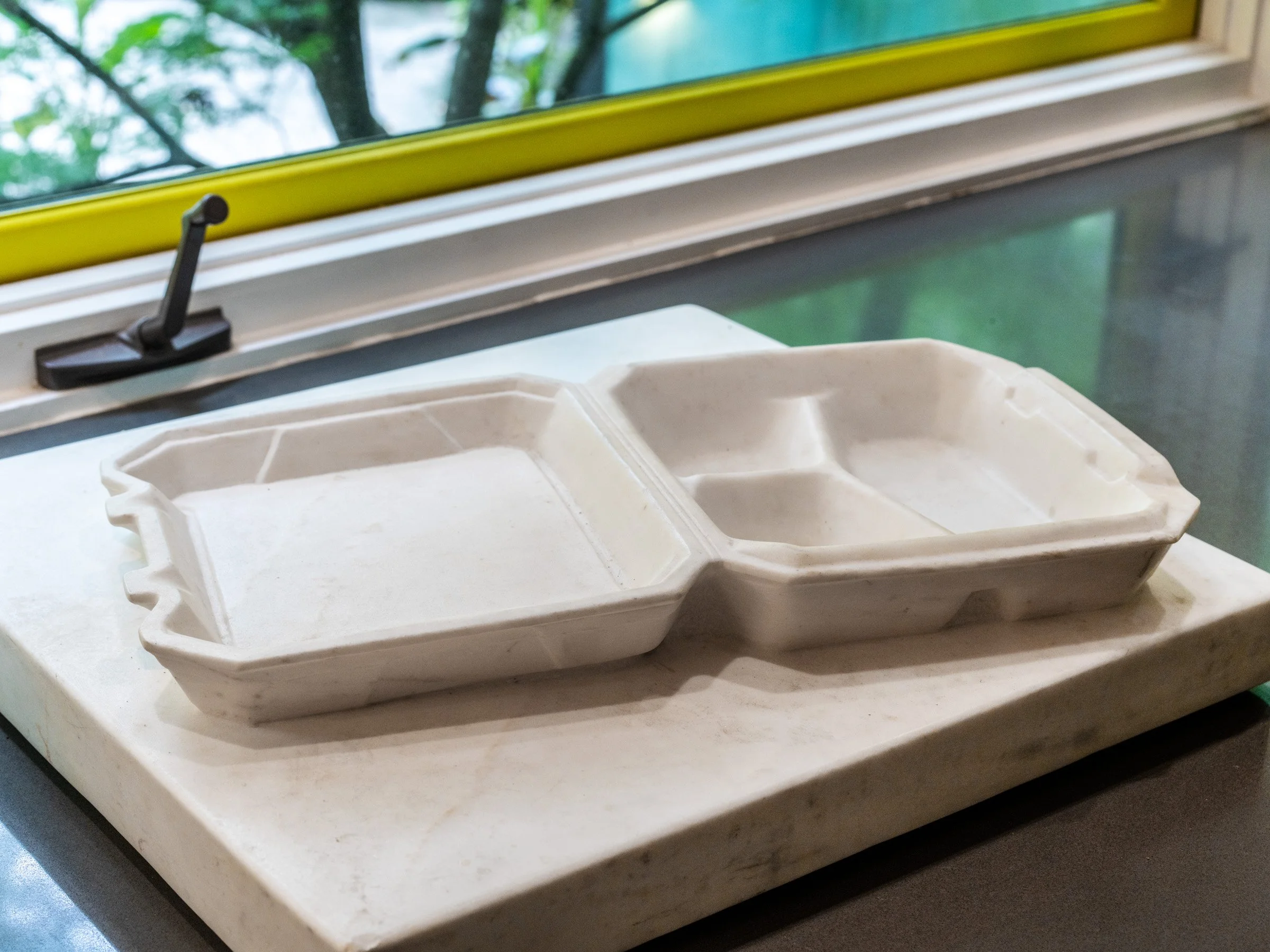
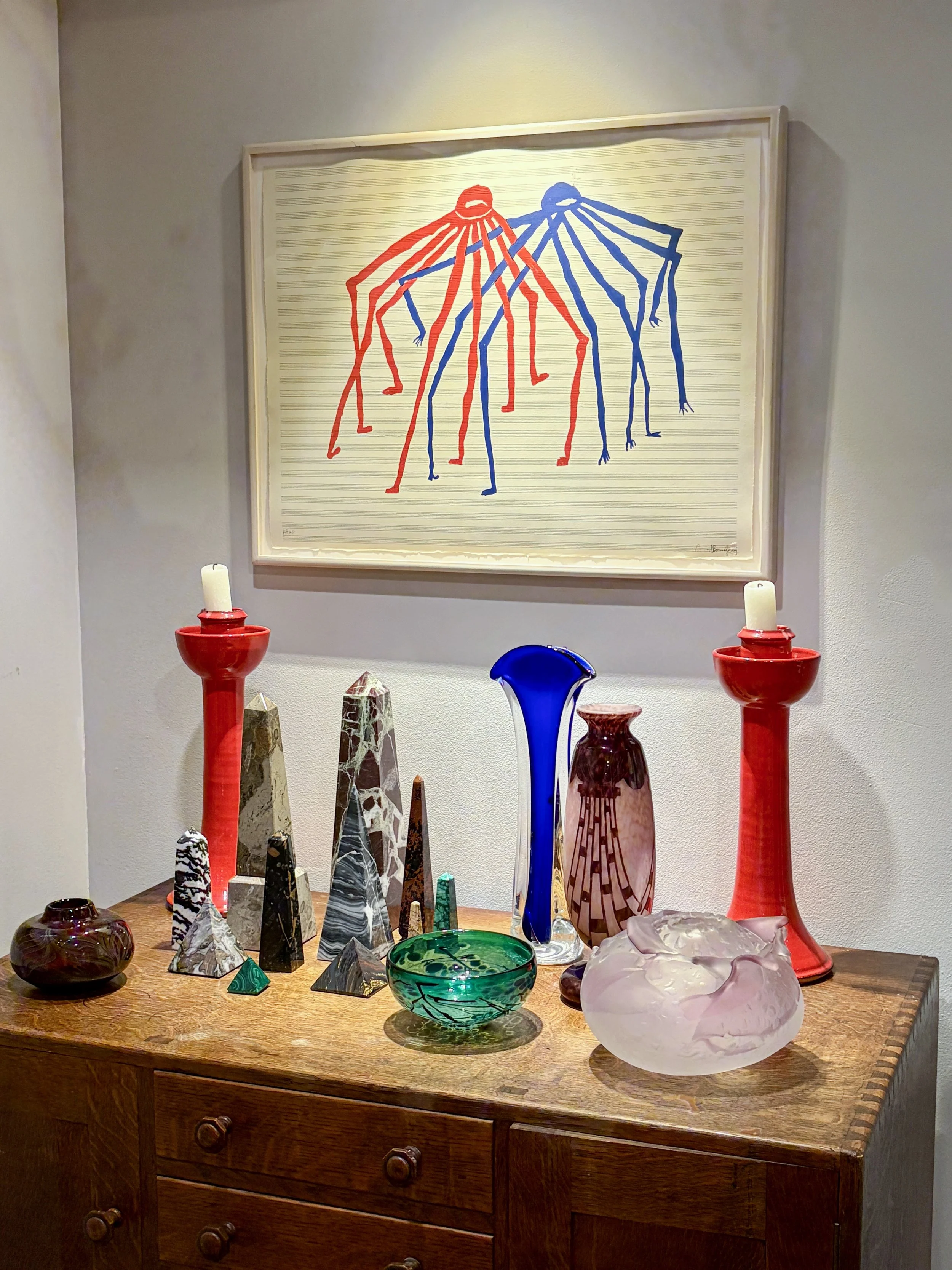
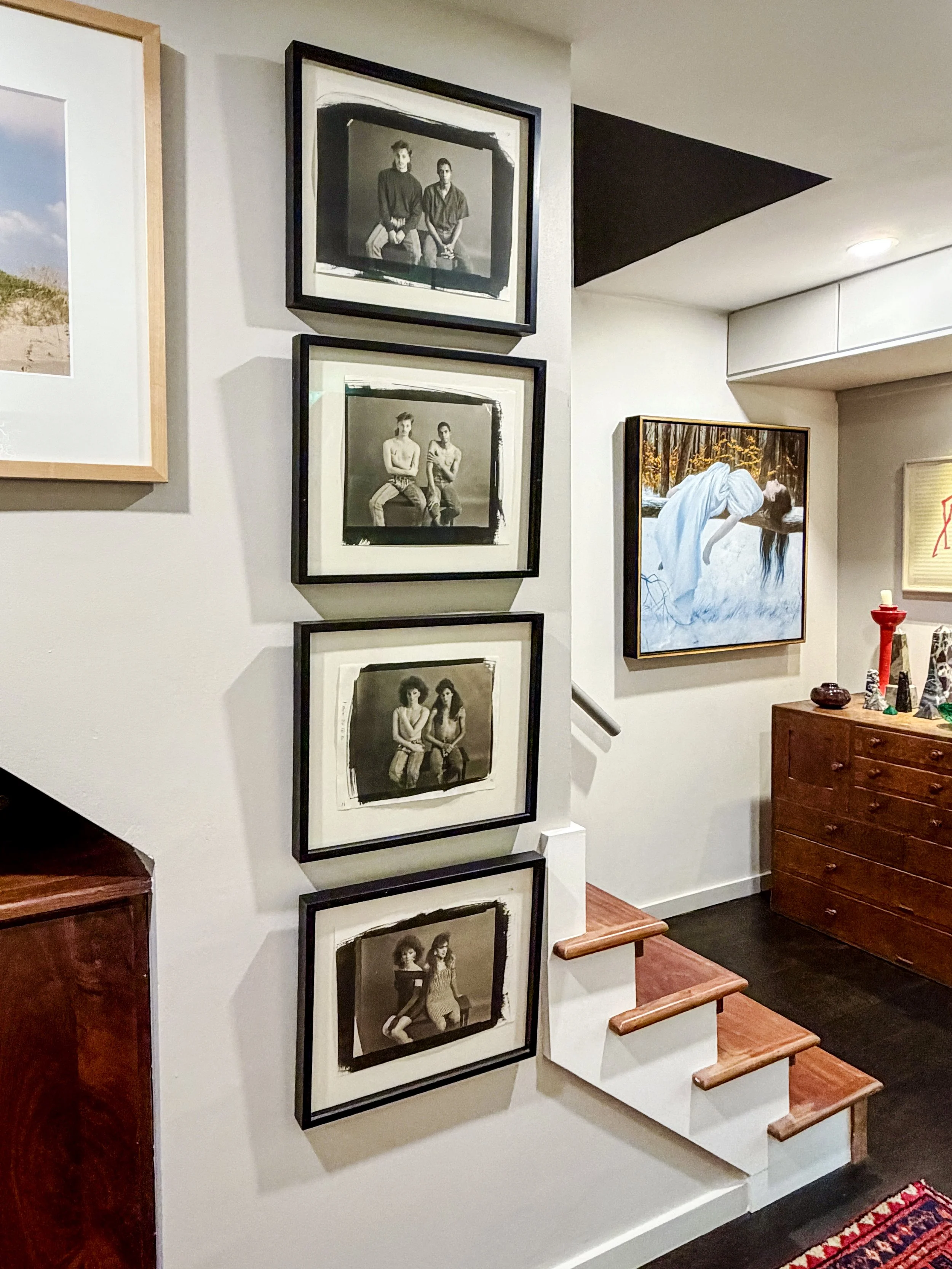
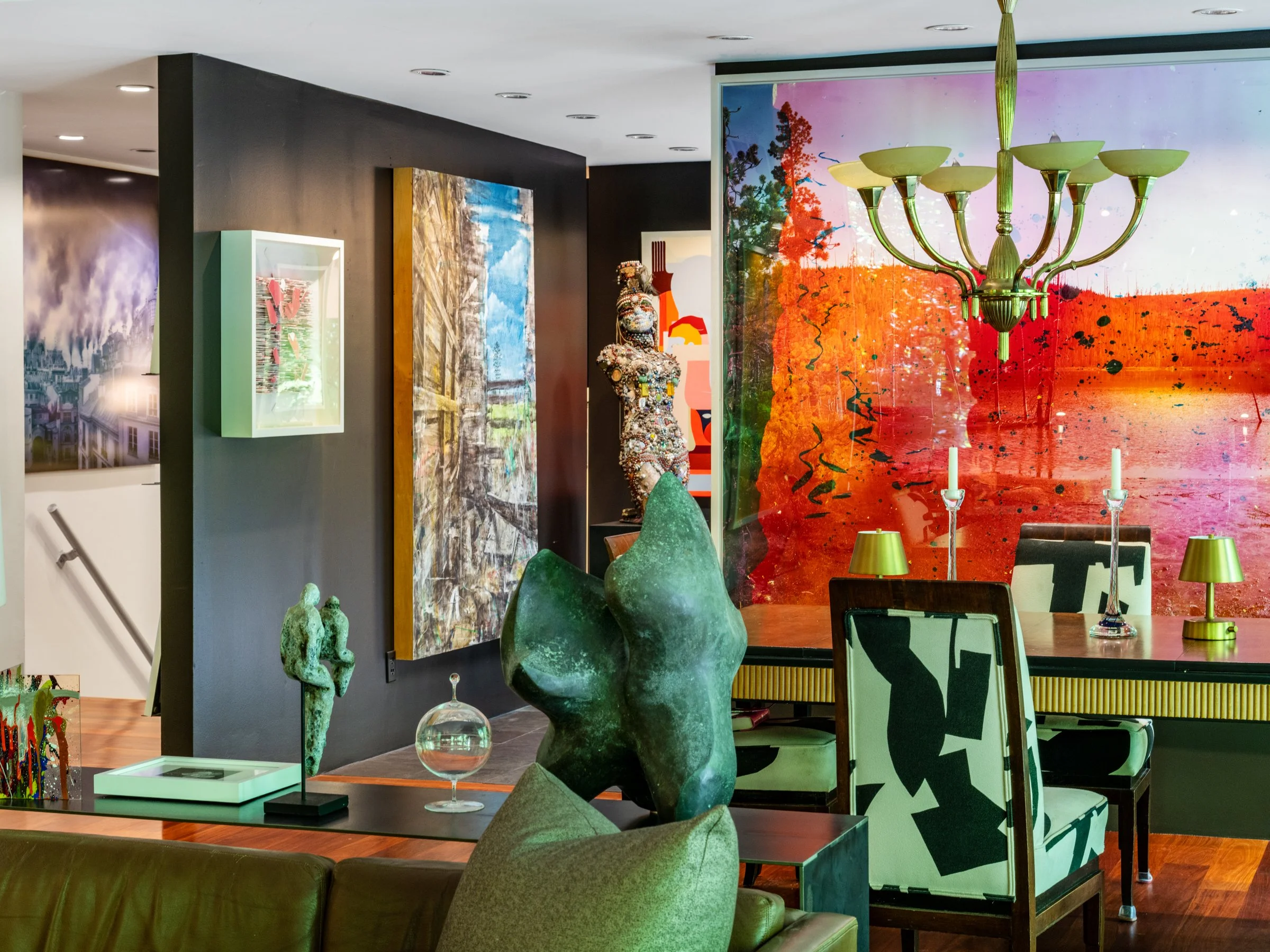
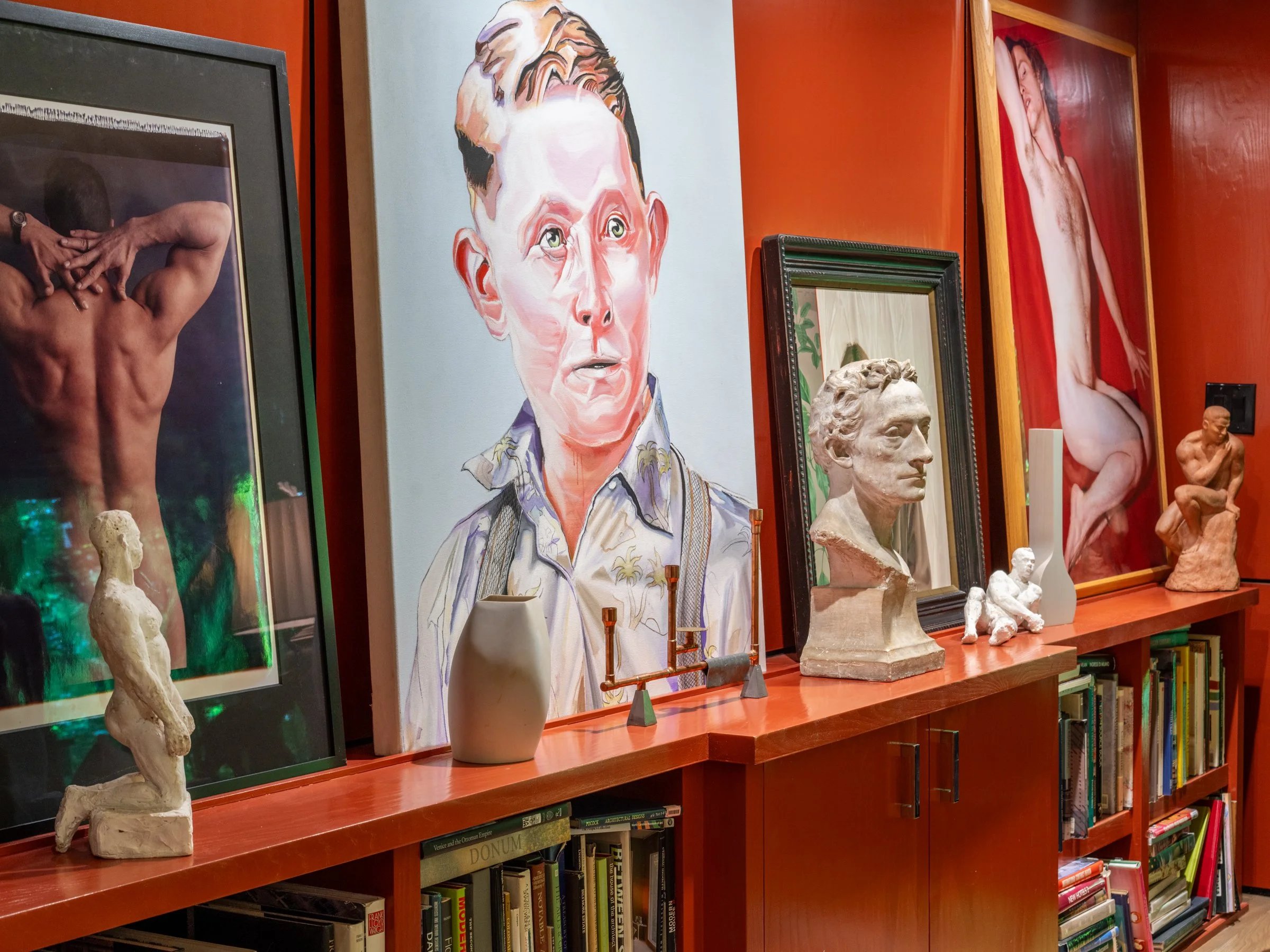
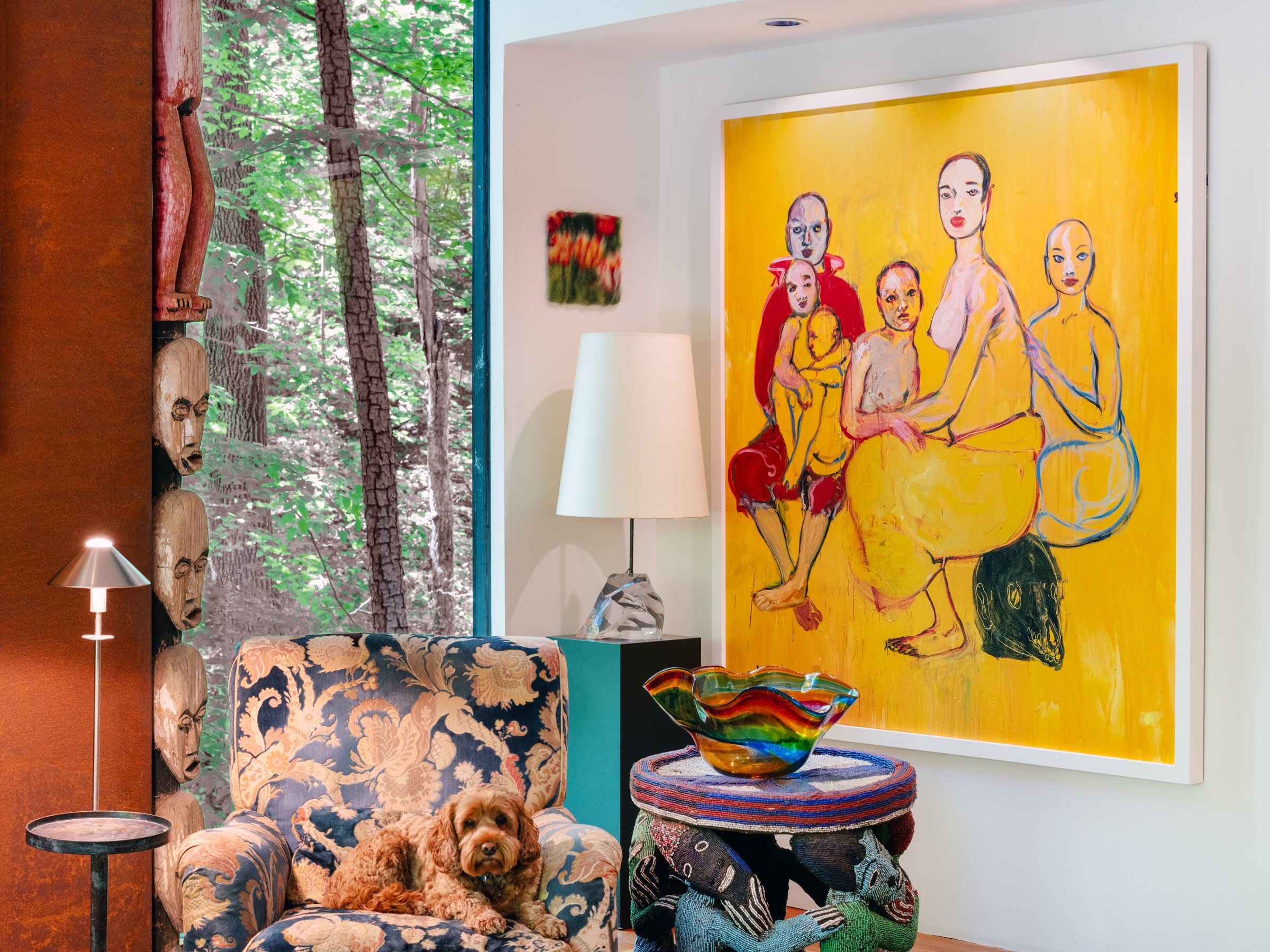
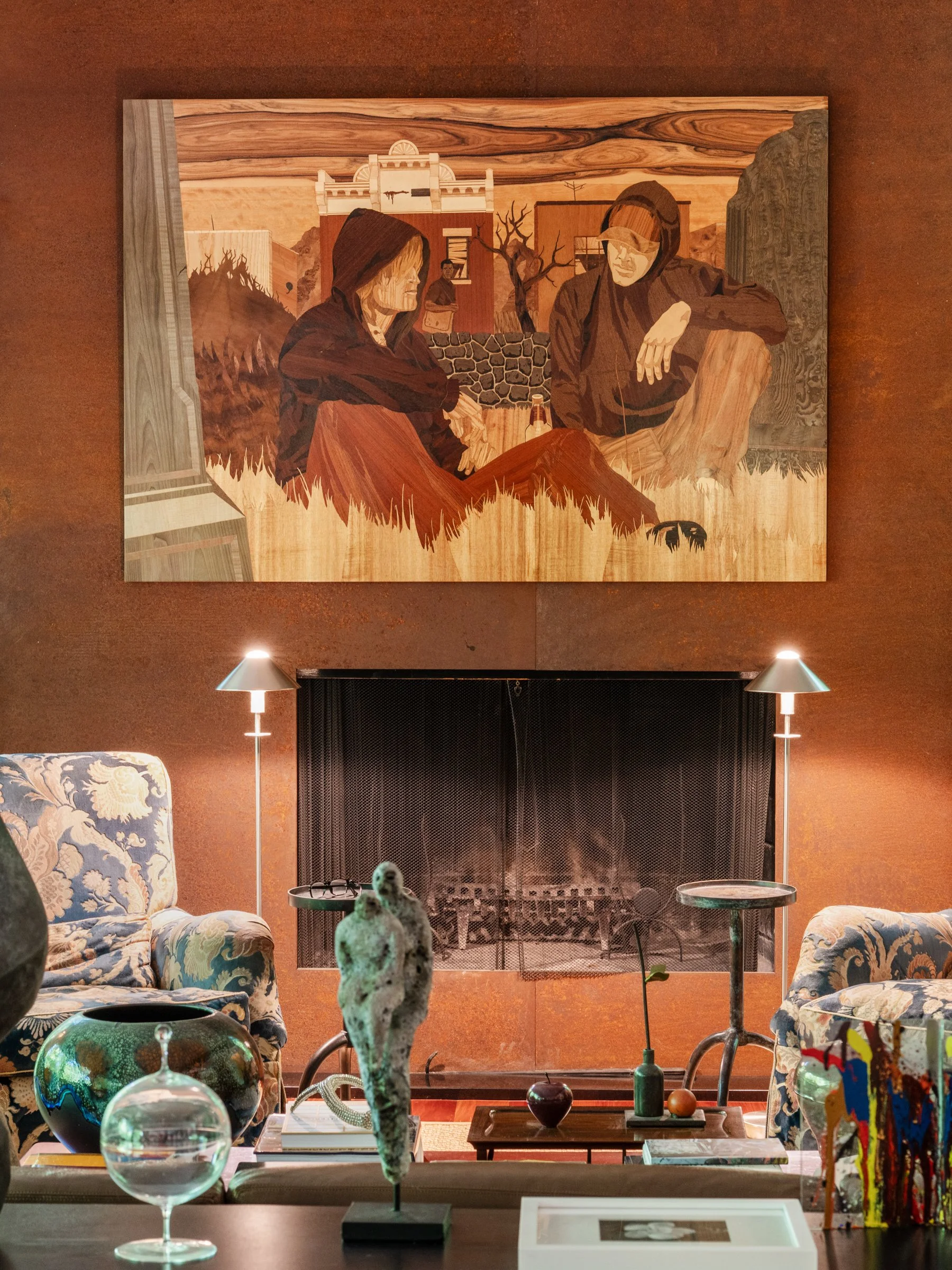
Their shared sensibility is particularly evident in their beautifully restored mid-century home. Here, collecting is not an exercise in accumulation but an evolving dialogue between works of art and the architecture that surrounds them. Paintings, sculpture, photography, and textiles move throughout the interiors, ranging from intimate works to large scale pieces. The parlor-like arrangement encourages visual connections across rooms and invites discovery.
“Over the years, the collection has become another layer of our life together. Every work carries a story: a place we visited, an artist we met, a friendship or a moment we shared. We don’t have many walls left, but everywhere we look, we see a story.”
A Life in Art
For Larry and Don, collecting art has never been about checking names off a list or filling the walls with trophies. It is about curiosity, connection and that unmistakable moment when a work stops you in your tracks.
Their collection is, in many ways, a portrait of their life together: artists they have championed, places they have traveled, friendships they have formed and, above all, the instinctive response they share to color, beauty and ideas.
What are some of the key themes in your collection?
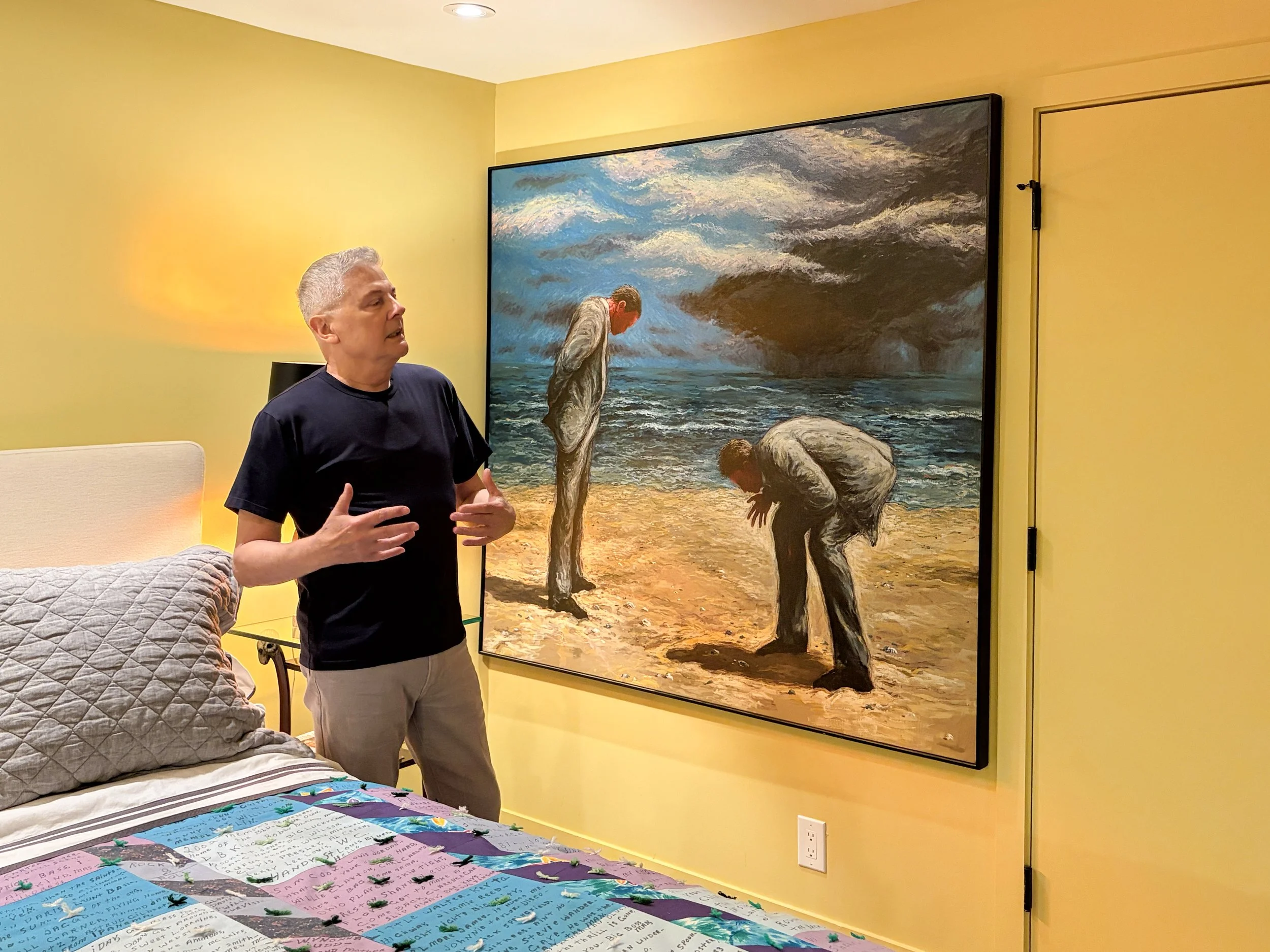
Larry: A good friend asked me that question several years ago, and I said, “Sexual ambiguity.” If you look around the room, you can see it. Our collection is inclusive. Another theme is color.
Don: Color was my first attraction to design and eventually to art. We both respond very strongly to it. Some people are afraid of color in their homes, but that’s not us. The large Matthew Brandt photograph in our dining room, with its bold red, is a great example. We also have a charming new colorful, mohair work by Paris-based artist Maria Szakats. We love the different shades of orange in the Joseph Albers and the bold yellow in the painting by the Cuban artist Carlos Quintana.
Larry takes color to another level. He loves orange, red and chartreuse.
Larry: Well, maybe not chartreuse.
Don: What about the bedroom downstairs? You do like chartreuse.
You grow as you look at art. Over time, you become more sophisticated and begin to recognize subtleties, but that first emotional response to color never really changes.
I remember being 12 years old, shopping for school clothes with my mother in downtown Cleveland. I saw a striped sweater with the most beautiful combination of reds, grays and blacks. I’ve never forgotten it. It sounds elementary, but the visual power of color is extraordinary.
Larry and Don: Many of the artists in our collection are from North Carolina, and many have become friends. Damian Stamer, Stacy Lynn Waddell, and Beverly McIver are examples. These are artists of national stature who also happen to come from our region.
We believe in them and in their talent. They become part of our family.
That’s how we’ve always collected. We did it in Cleveland, we did it in North Carolina, and we’ll continue to do it. We travel, visit galleries and simply respond to art. When we both have that feeling—that little thing inside that says, “Wow, I really like this”—we buy it.
It doesn’t have to be a blue-chip artist. It just has to speak to us.
Over the years, the collection has become another layer of our life together. Every work carries a story: a place we visited, an artist we met, a friendship or a moment we shared. We don’t have many walls left, but everywhere we look, we see a story.
These works are valuable to us because they are part of our lives.
What new acquisitions are you excited about?
Larry and Don: We’re especially thrilled with our recent Joseph Albers acquisition, particularly because of his connection to Black Mountain College and his extraordinary influence as both an artist and teacher.
We also recently acquired a work by Kenneth Bennett Shipman, and that has a wonderful story.
When we’re in New York, we like to eat at Eulalie, Tina Vaughn and Chip Smith’s restaurant. On a recent trip, we met Kenneth, a charming waiter who had studied art in North Carolina and earned a graduate degree from the Pennsylvania Academy of the Fine Arts. He was living in New York, working as a server while pursuing his life as an artist.
What is it like collecting together? Do you both have to agree to acquire a new work?
Don: Generally, we’re very simpatico. Larry pushes me to be more avant-garde, which is good. I think our collection shows how great his eye is.
We usually agree. What we’re both attracted to is color and quality. We’ve been a good team, and Larry has certainly opened my eyes to new art.
Larry: It’s been a wonderful working relationship.
I became particularly interested in photography as a contemporary art form in the 1990s and early 2000s, and we collected photography very deeply during that period. Our friend Allen Thomas helped shape the photography collection in our community and certainly influenced Don and me. We added photographic works by Anthony Goicolea, Jeff Whetstone, Alex Soth, Mona Kuhn, Taj Forer and Tom Hunter.
We spent those years visiting exhibitions in New York and Miami, attending major art fairs and traveling with collectors, curators and friends. We worked with leading dealers from New York to California.
Collecting has always been about community for us—working with artists, dealers, curators and other collectors. We’ve had a lot of fun together.
We are a community.
You are also working on a documentary about Black Mountain College. Tell us about it.
Larry: One of the projects taking up much of my time and energy right now is a documentary about the legacy of Black Mountain College.
Many people ask, “What is Black Mountain College? Is that where you went to school?”
No. It was something much bigger than that.
Black Mountain College was one of the most important episodes in the history of North Carolina and American art. It existed from 1933 to 1957 and became a transformative force in visual art, poetry, literature, dance and music.
It was also remarkable for its approach to social change. It was fully integrated and welcomed artists of color, elevated the status of women and created an environment that embraced
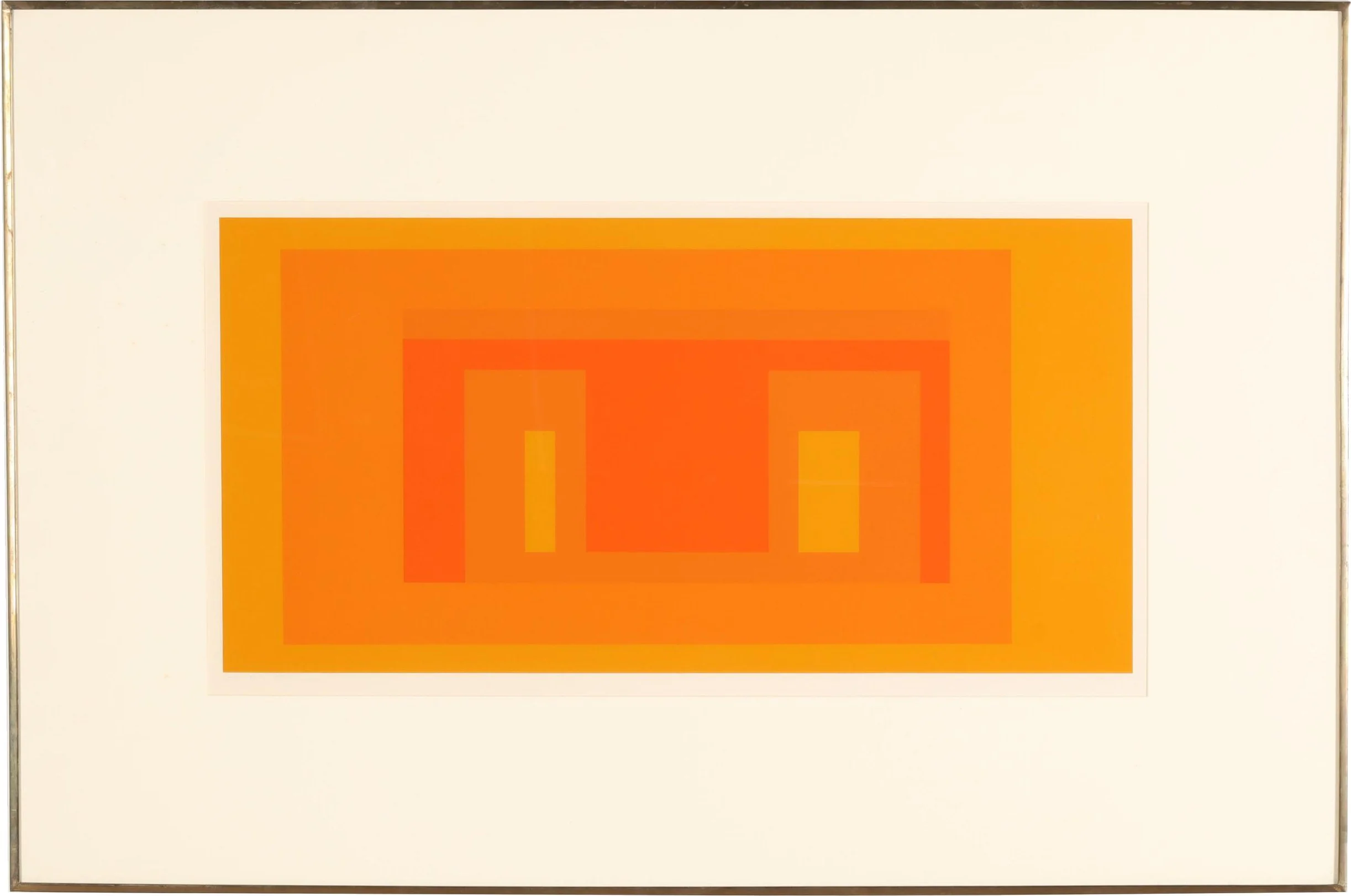
Photo courtesy of Leland Little Auctions
LGBTQ+ people. Everyone came together to create, collaborate and honor one another’s humanity.
That is worth making a film about.
The college was a small community in the mountains outside Asheville, existing through the Depression, World War II and the era of Jim Crow. Yet artists there were experimenting, challenging conventions and creating work that would influence American culture for decades.
Black Mountain College artists became an important part of the collection of the North Carolina Museum of Art and museums around the world. Their influence is still felt today.
The film is not simply about honoring the past. It is about reminding us where creativity and humanity can come from—and what happens when people are given the freedom to explore both.
What was distinctive about the multidisciplinary and collaborative approach at Black Mountain College?
Larry: Much of it is due to Joseph Albers, who came from the Bauhaus in Germany as Hitler rose to power. He helped shape the philosophy of this new school in the mountains.
Black Mountain College emphasized learning by doing. You might study dance, music, poetry, painting or architecture, and each discipline would inform the others. The cross-pollination was powerful. It expanded an artist’s sense of what was possible.
They weren’t necessarily limited to traditional materials like canvas and paper, either. They used sticks, leaves, fibers—whatever they found around them. Albers taught students to see the geometric and natural beauty in ordinary things and transform them through textiles, collage and other forms.
Robert Rauschenberg was there, too. The emphasis was on honoring form, shape and energy rather than being confined by traditional definitions of art.
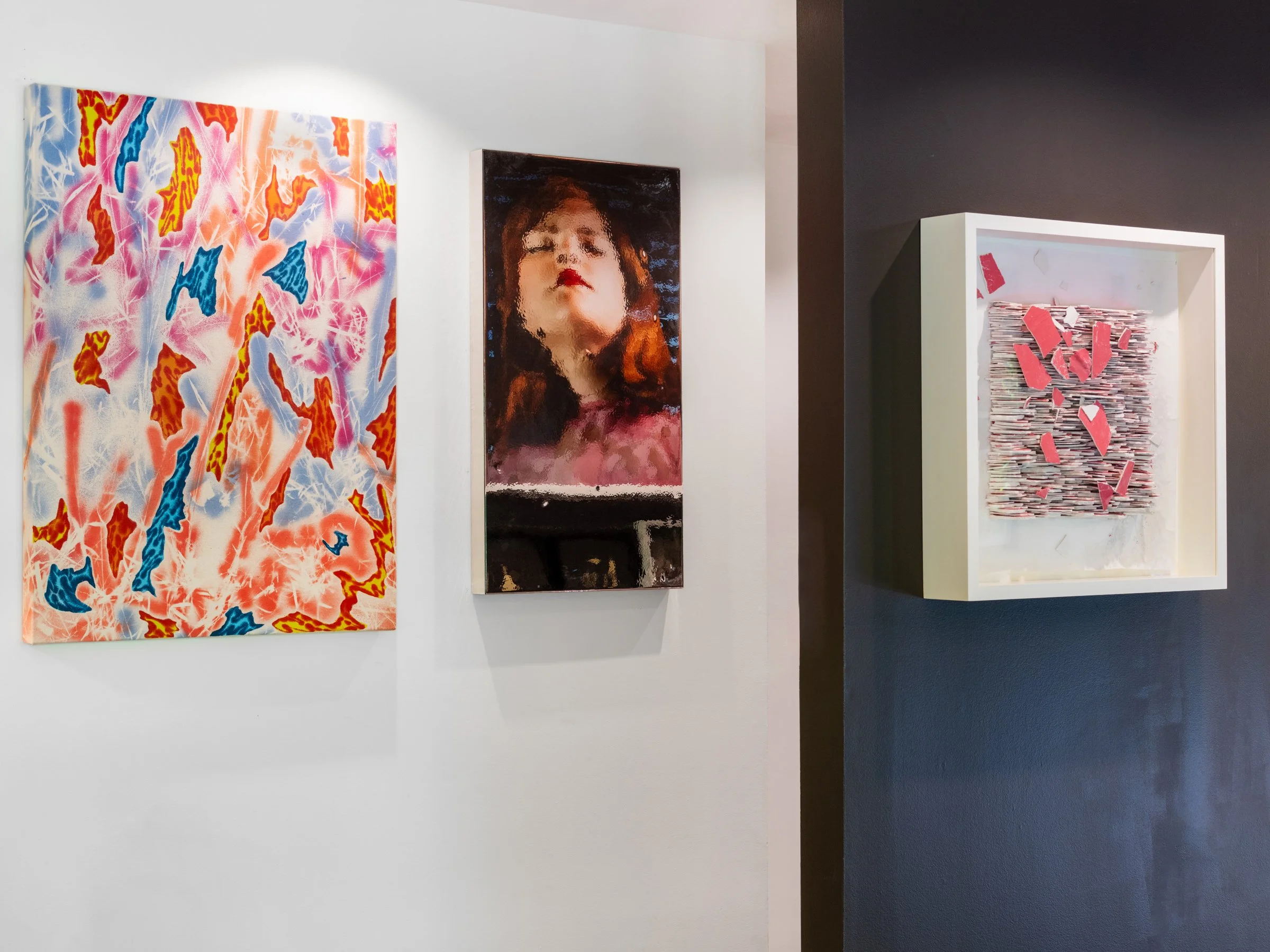
We began talking and discovered his story. We asked to see his work, and he sent us some images. We admired what we saw. Then, one day, a small painting arrived in the mail—a beautiful fresco-like work, almost post-impressionist. It felt fresh and completely of our time.
We both loved it.
At our age, it is wonderful to encounter the enthusiasm of someone in his 20s who is just beginning his life as an artist. Kenneth is living the reality that so many artists face: working to support himself while creating his art.
Those are exactly the collecting experiences we love. When we see exceptional talent, we want to support it.
If you could add one new work to your collection—by any artist in the world—what would it be?
Don: At this stage of my life, I’m particularly attracted to sculpture. If I could have a Giacometti or a Henry Moore, I would love it.
Larry: I’ll take that! And to complement the sculpture, I’d like an Ellsworth Kelly or a Mark Rothko.
I’ll take both.
The environment was boldly creative. America was emerging from the Depression and World War II, and there was a tremendous appetite for new ideas. Artists, musicians, dancers and architects were helping shape a new way of thinking.
By the time the college closed in 1957, its ideas had traveled far beyond that little community in the mountains.
The spirit of Black Mountain was no longer contained in one place. It had entered the world.
And perhaps that is why it still matters.
Its legacy is not simply a collection of artworks or famous names. It is an idea: that creativity flourishes when people from different disciplines, backgrounds and perspectives come together with curiosity, generosity and freedom.
That spirit is still very much alive—and it is one of the reasons we want to tell this story now.