Jerstin Crosby
•
Winston-Salem, North Carolina
•
Jerstin Crosby • Winston-Salem, North Carolina •
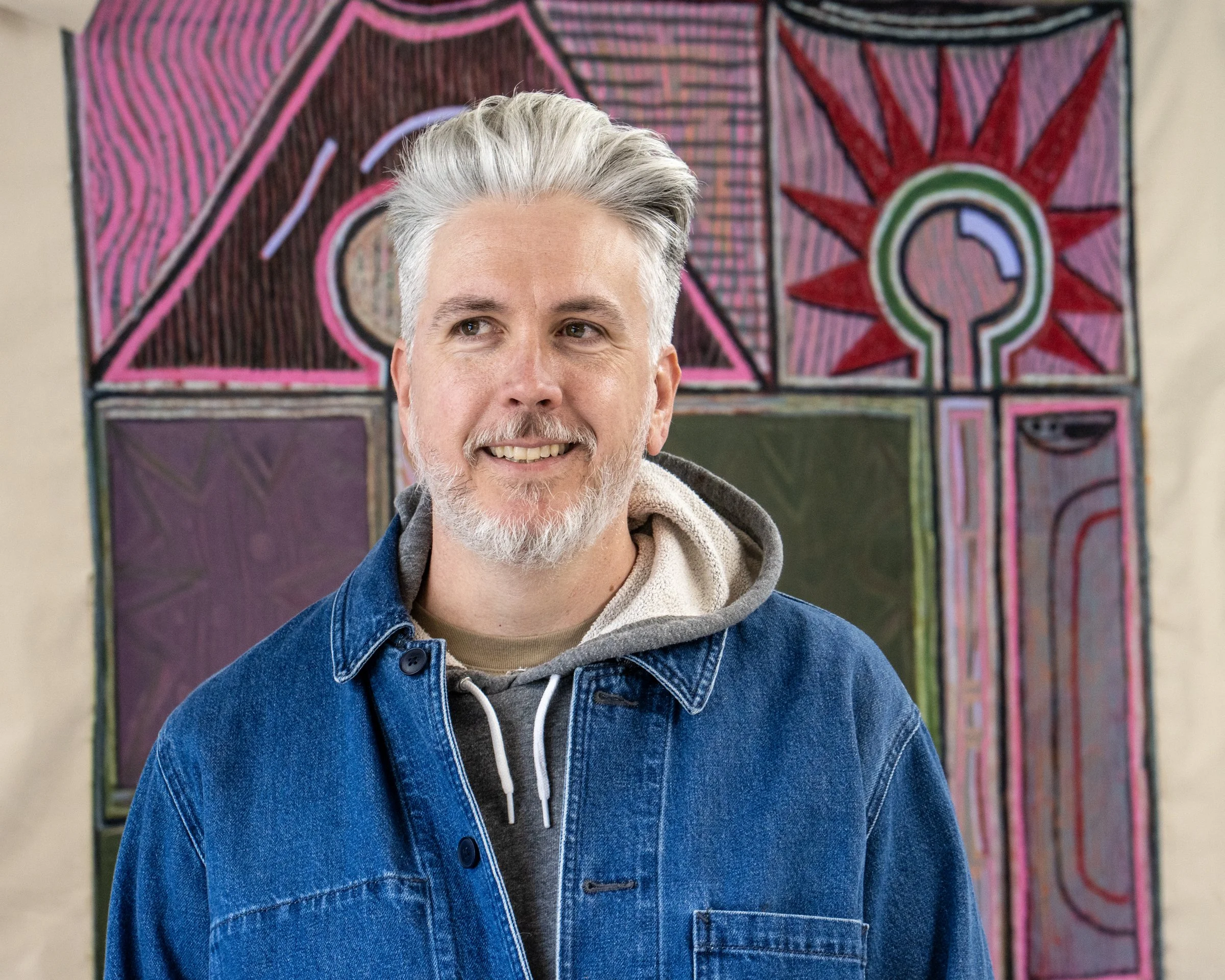
Jerstin Crosby is an artist based in Winston-Salem, North Carolina. Born in Dothan, Alabama, he received his BFA from the University of Alabama and his MFA from the University of North Carolina at Chapel Hill. His work has been exhibited nationally, including at the Contemporary Art Museum in Raleigh, the International Print Center New York, Knockdown Center in Queens, and Tiger Strikes Asteroid in Greenville.
Crosby has been the recipient of grants and commissions, including a permanent public sculpture commissioned by the Downtown Raleigh Alliance, and has participated in professional development and critique programs such as NYC Crit Club’s Canopy Program. Through these experiences, he has built a practice that is supported by both exhibition and public-facing work across a range of contexts.
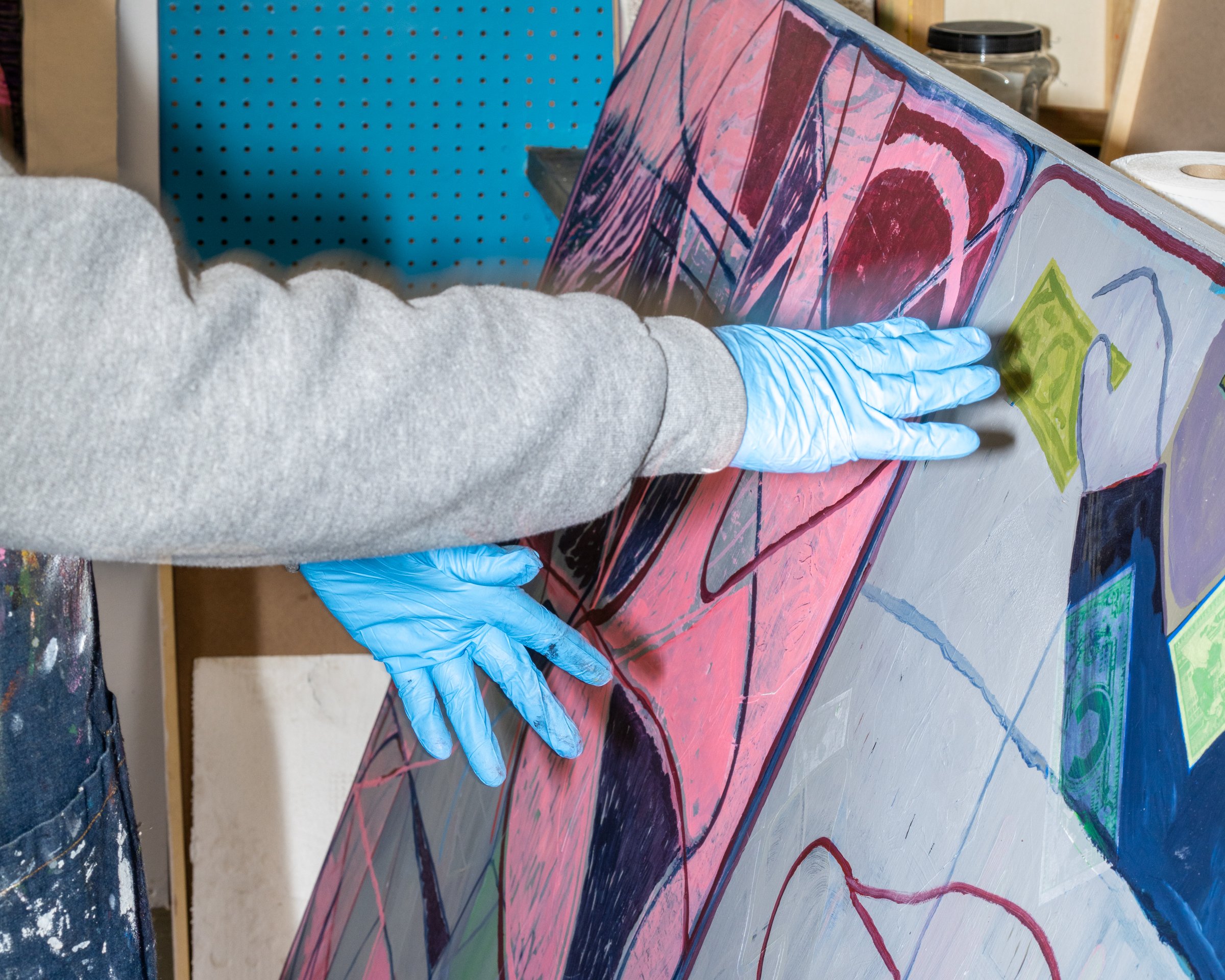
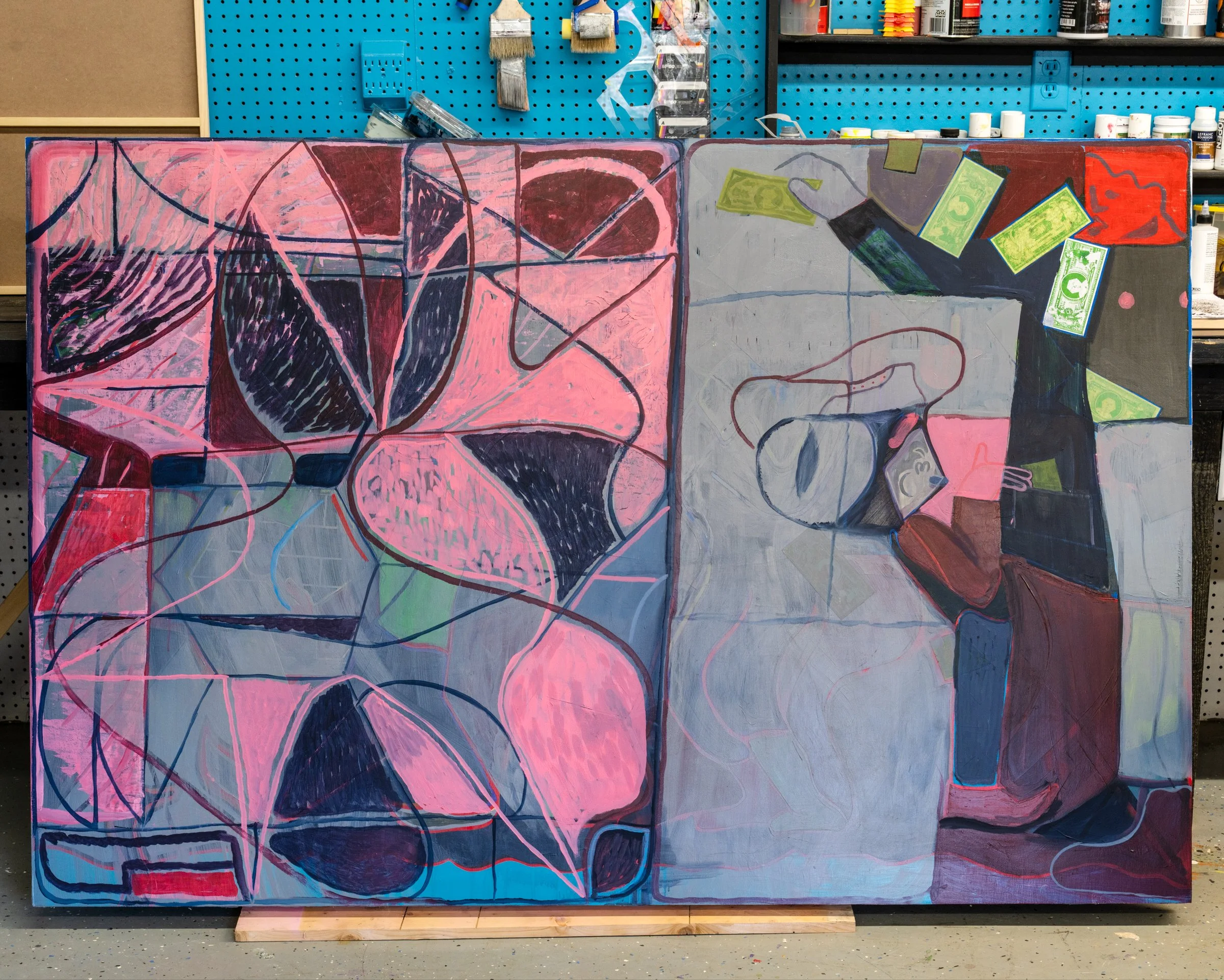
There is an enduring fluidity in Jerstin Crosby’s work—a commitment to experimentation that moves seamlessly across his interdisciplinary practice. This is most apparent where distinctions between media begin to dissolve: paintings become objects, and objects, in turn, take on the logic of images. From 2020 to 2023, Crosby worked with cut forms layered into shaped supports that extended from the wall, creating a depth both literal and illusory. More recently, he has shifted toward singular planes of canvas and paper, while maintaining an interest in the interplay between foreground and background—their push and pull, and occasional collapse. This spatial tension is one facet of a complex visual language Crosby has developed over time, unfolding across drawing, painting, and sculpture as an ongoing, interconnected exploration.
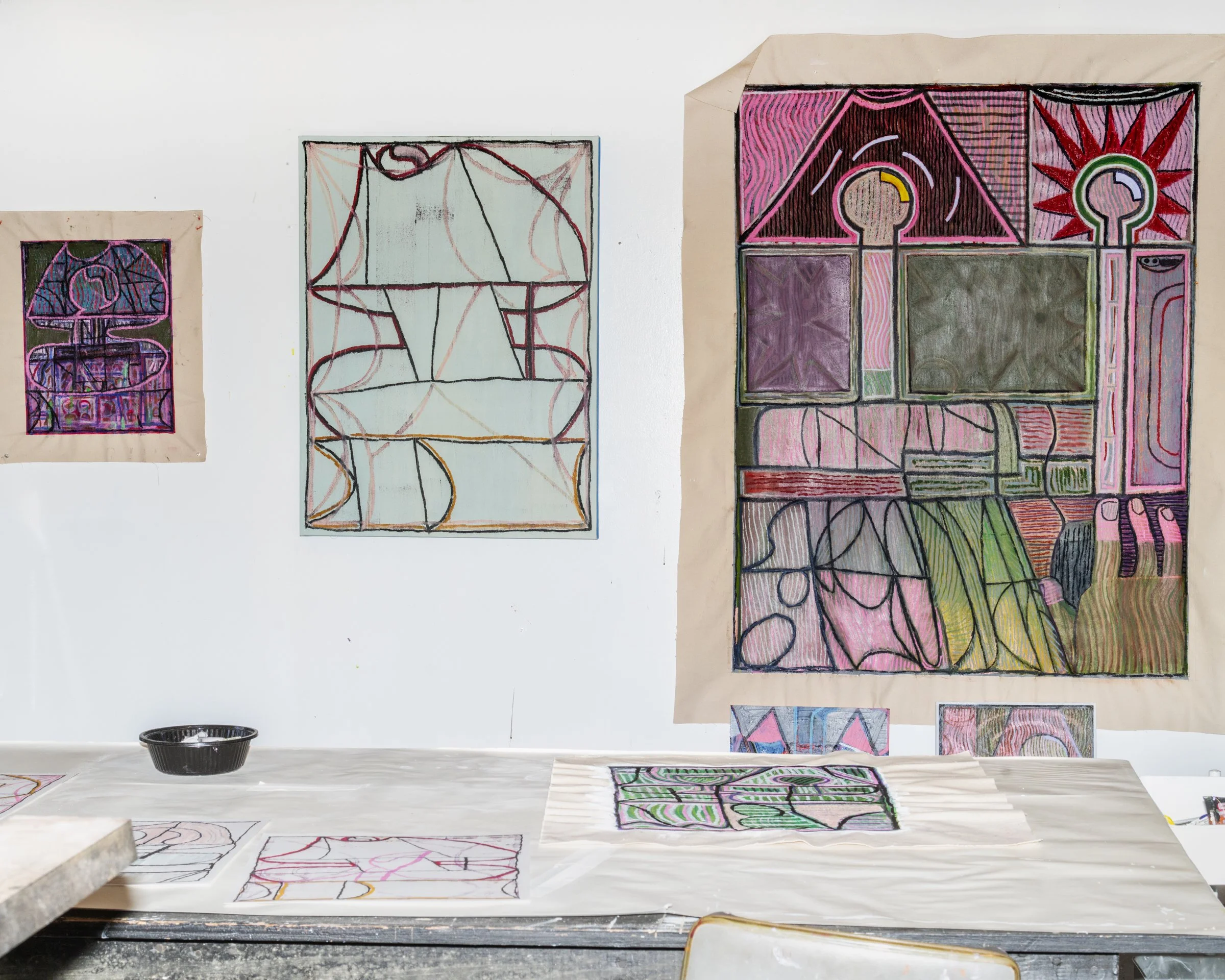
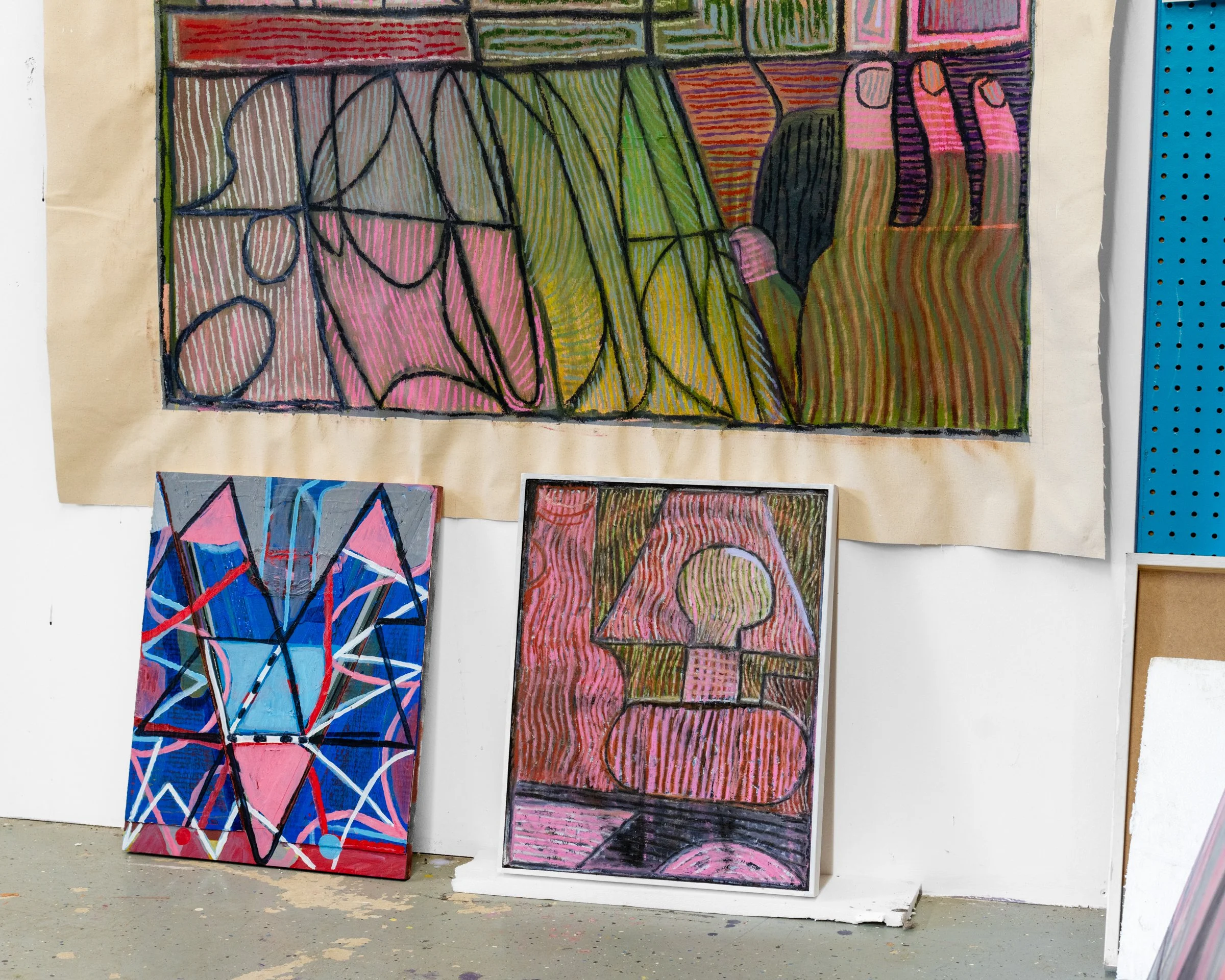
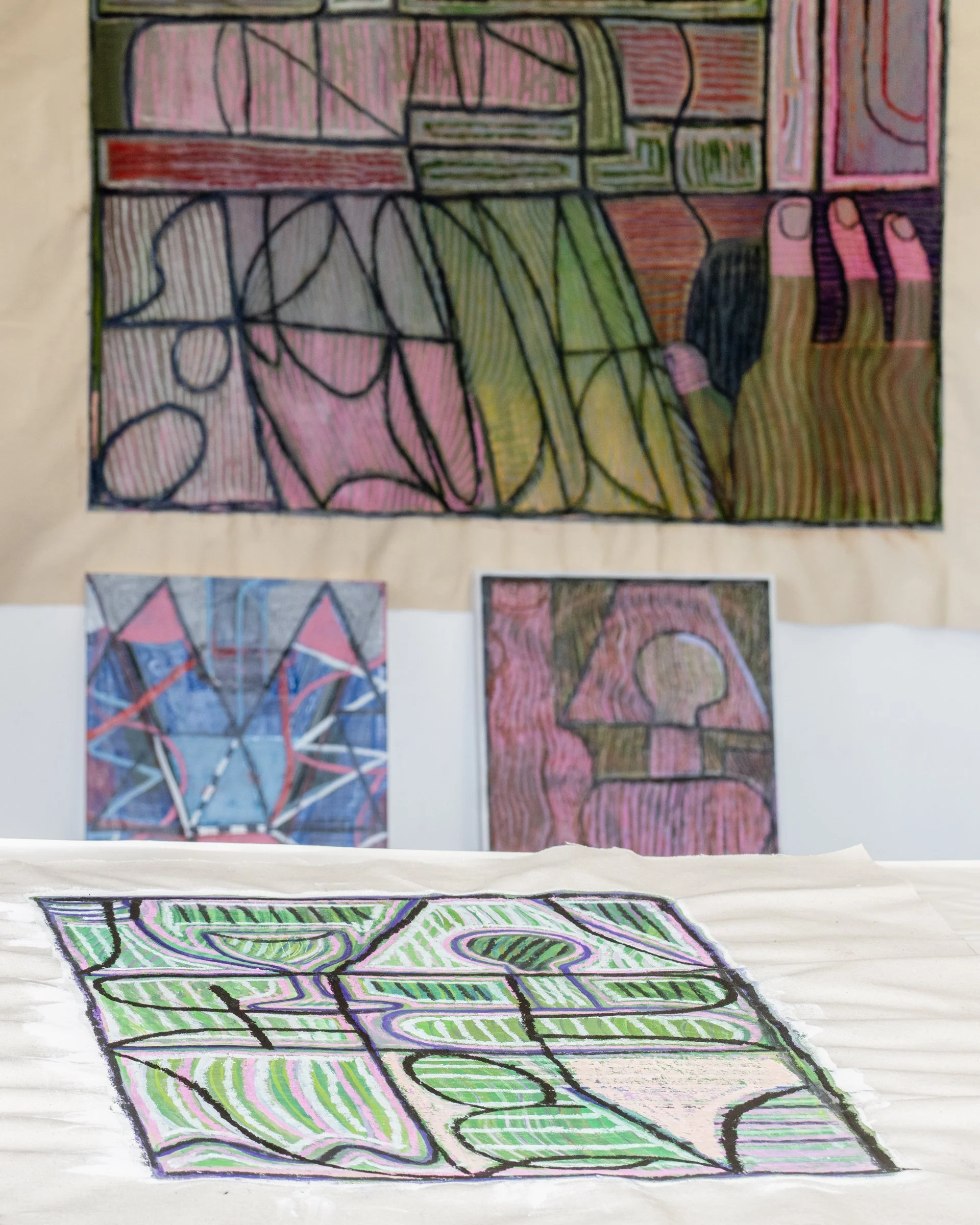
What first registers is a sense of visual immediacy—bright, flattened forms, familiar silhouettes, and a graphic sensibility that foregrounds gestural freedom and an active engagement with line. But the longer one looks, these elements begin to shift: figures and objects emerge and dissolve within layered structures, shapes operate as both figure and ground, and cutouts expose the wall behind, collapsing distinctions between image and support. There are multiple references at play here: the bold outlines, flattened color, and visual clarity of comic and zine aesthetics; a spatial instability akin to artists like Tomma Abts; and a connection to a Southern artistic legacy, particularly the patchwork logic of quiltmaking, where compositional structure is inseparable from a sense of tactility and material presence.
Crosby frequently returns to a tight vocabulary of motifs—faces, hands, lamps, speakers, boomboxes. Depending on how one reads the work, these objects can be seen as either symbols, or as recurring anchors within an evolving system. These elements are rearranged and reconfigured across works, creating a sense of continuity while allowing each piece to operate on its own terms. The result is a body of work that feels both modular and cumulative, as if each composition were part of a larger, ongoing construction.
At its core, Crosby’s practice is less about representation than about relationships—between parts and wholes, surface and structure, image and object. His works don’t settle into a single mode of viewing; instead, they ask to be read slowly, moving between recognition and abstraction, clarity and disorientation, with meaning unfolding over time.
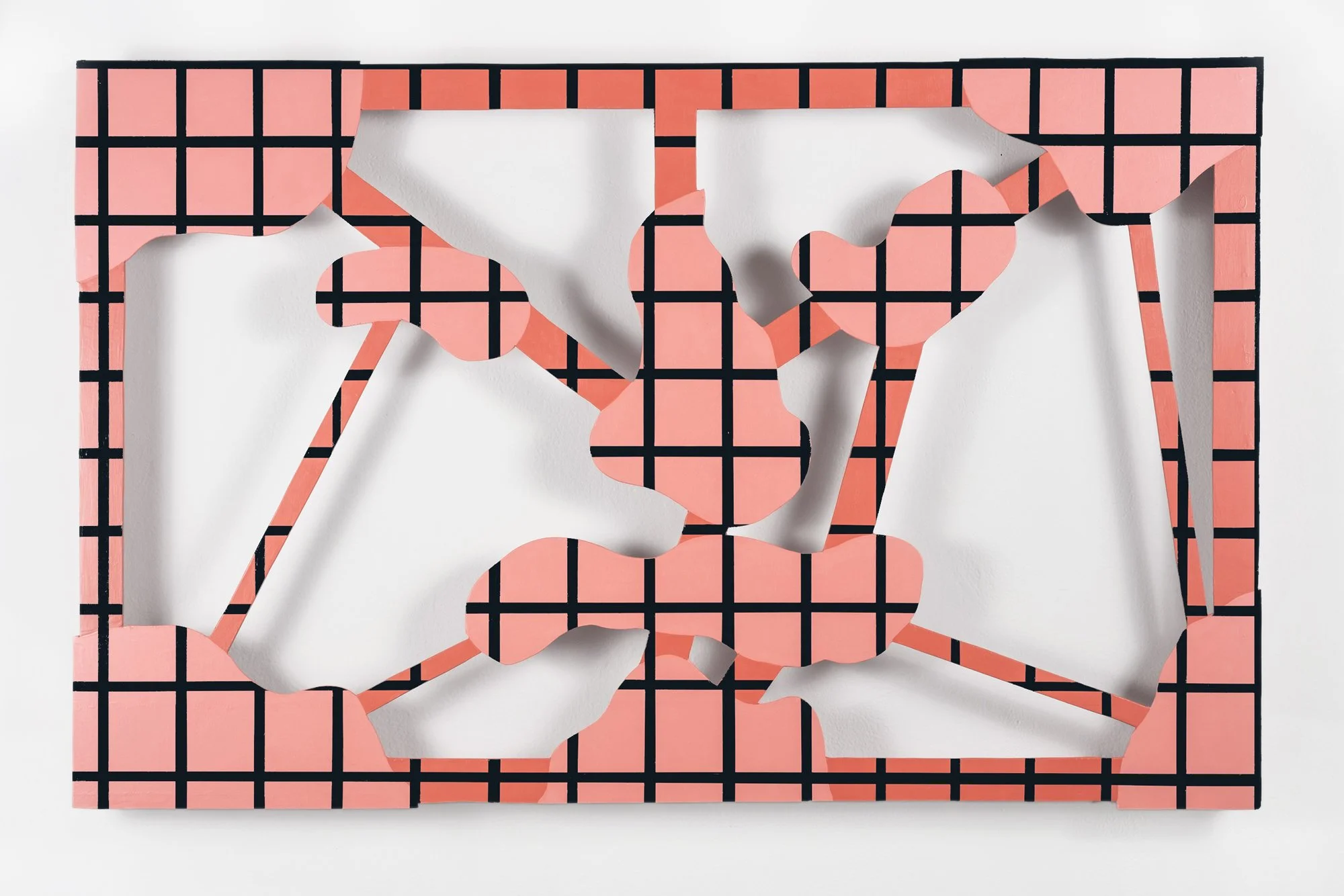
Pink Panther, 2020
Acrylic and enamel on shaped wood
28 x 44.5 in
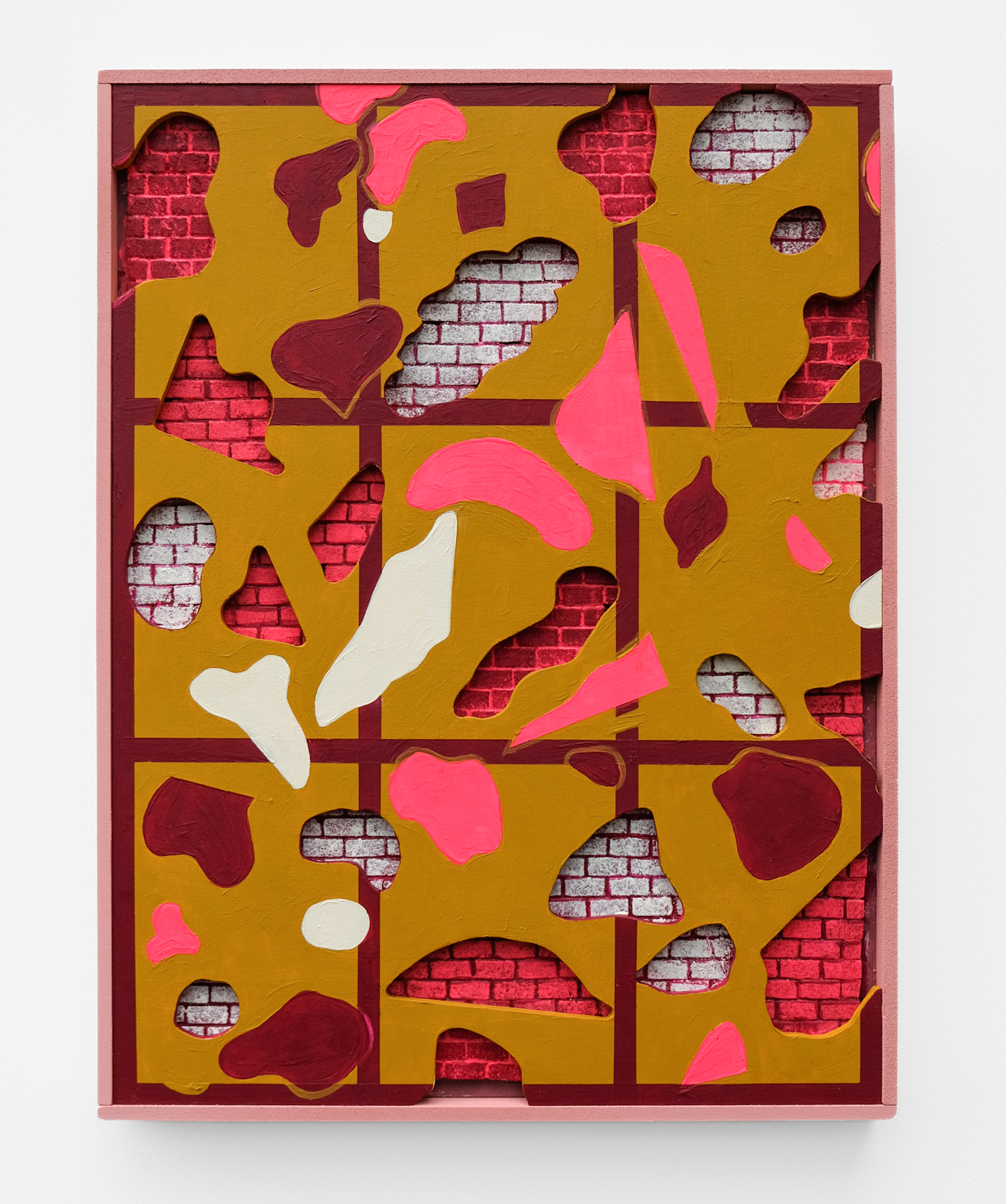
Endless Veil, 2021
Acrylic, miniature bricks, balsa, laser cut wood mounted on wood panel
16.5 x 12.5 in
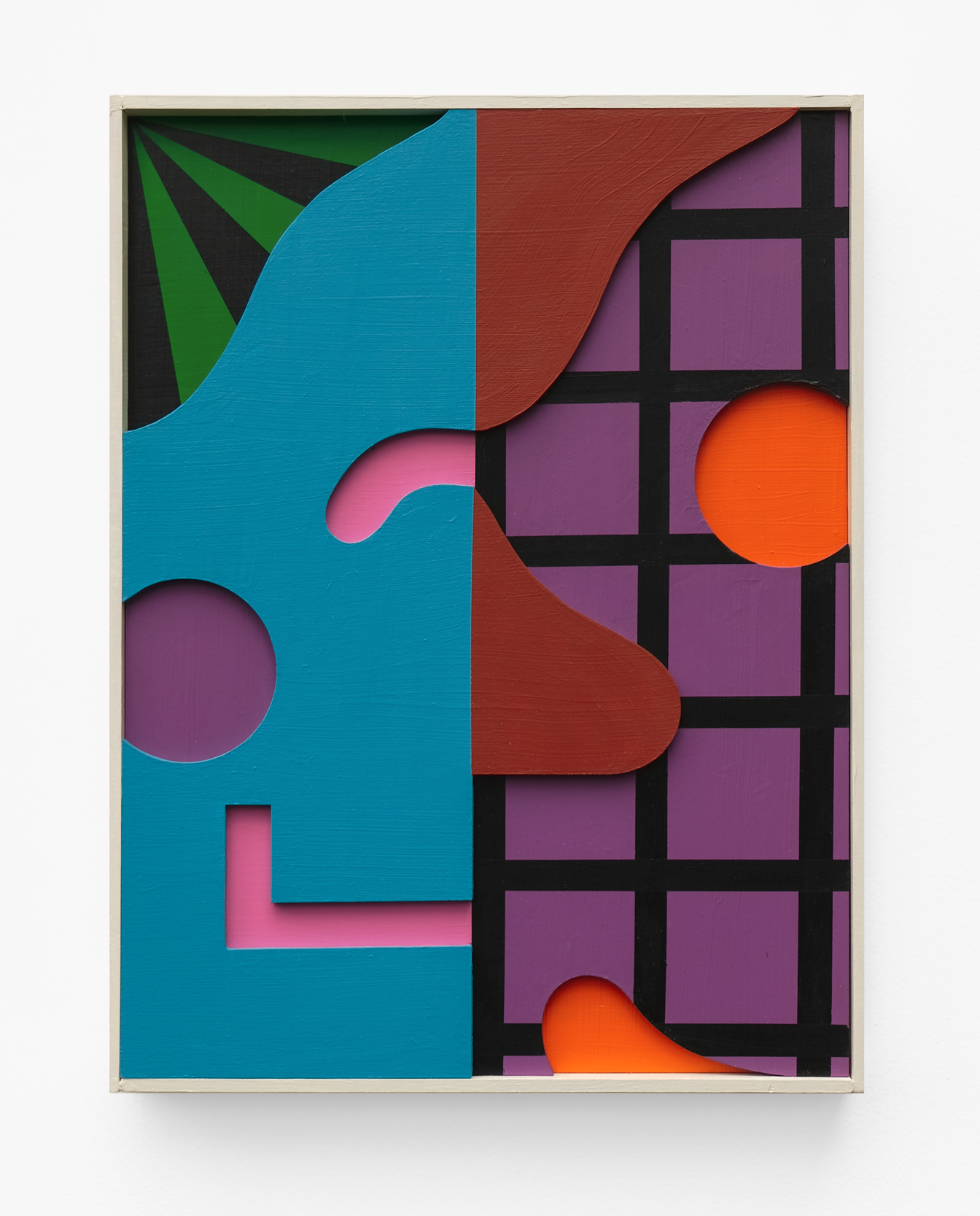
Broken Mirror, 2021
Acrylic and shaped wood on wood panel in Artist's frame
16.5 x 12.5 in
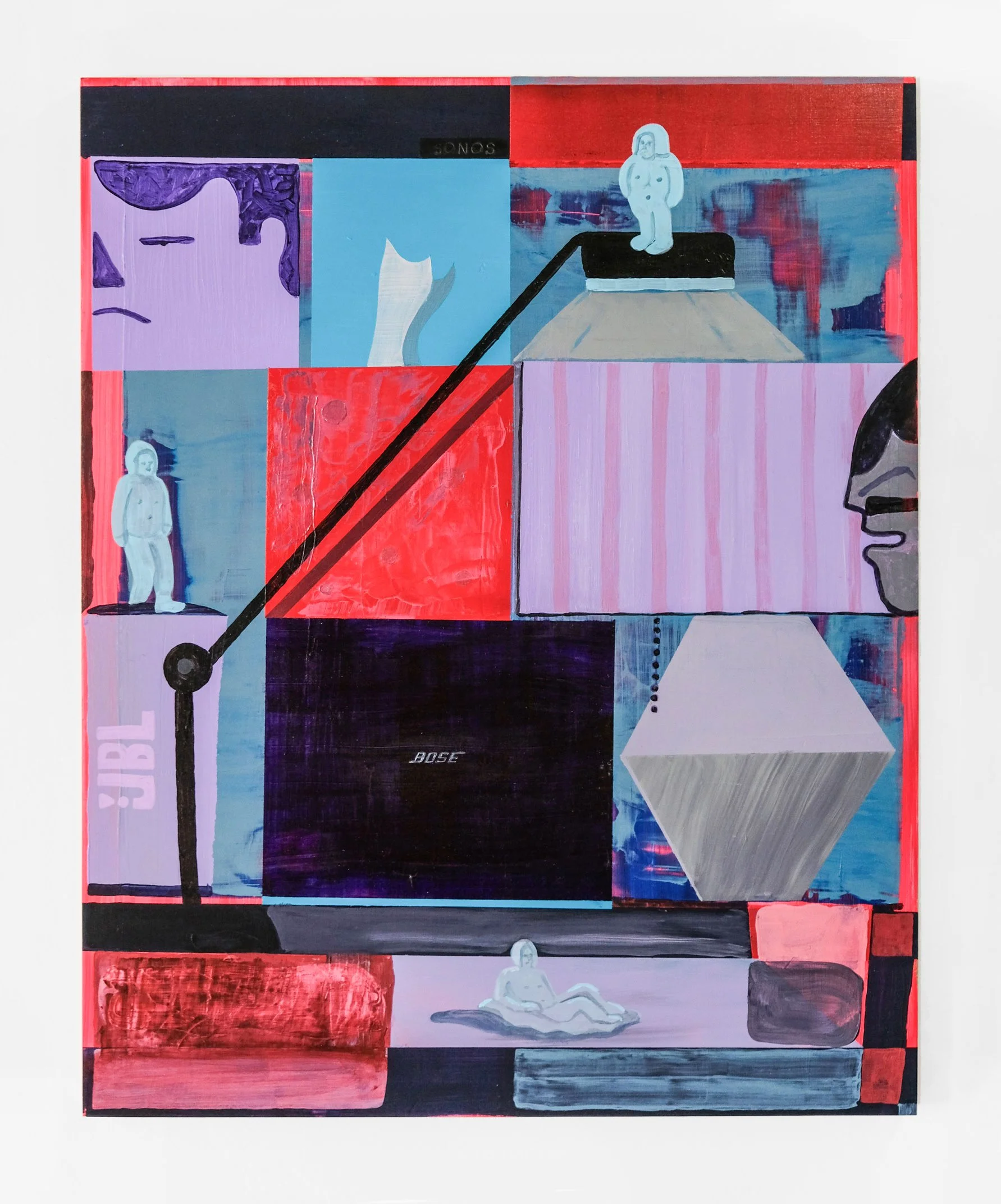
Slow Down / Deaf Jams, 2025
Acrylic on cradled panel
20 x 16 in
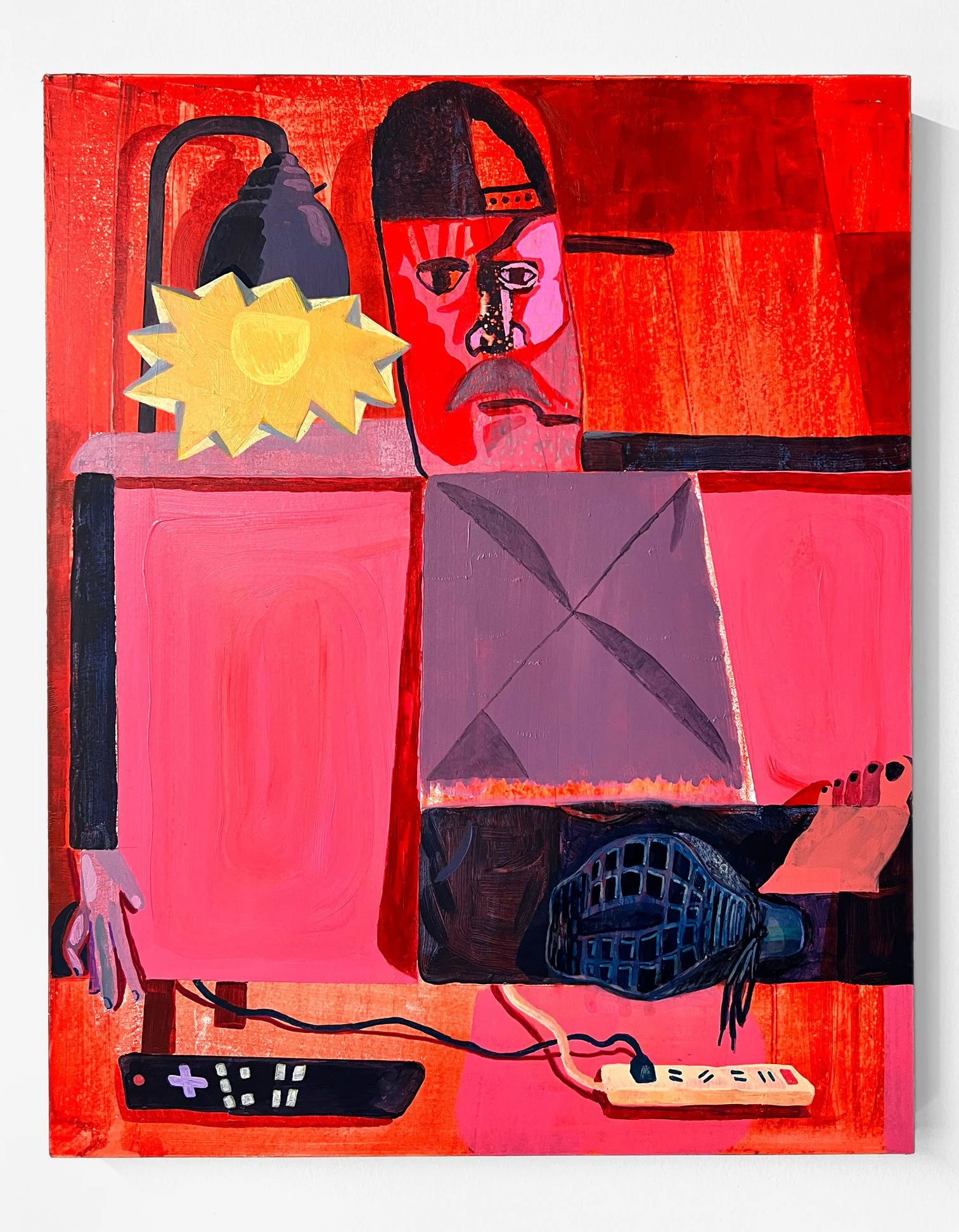
Channel Surfer, 2025
Acrylic and oil on cradled panel
20 x 16 in
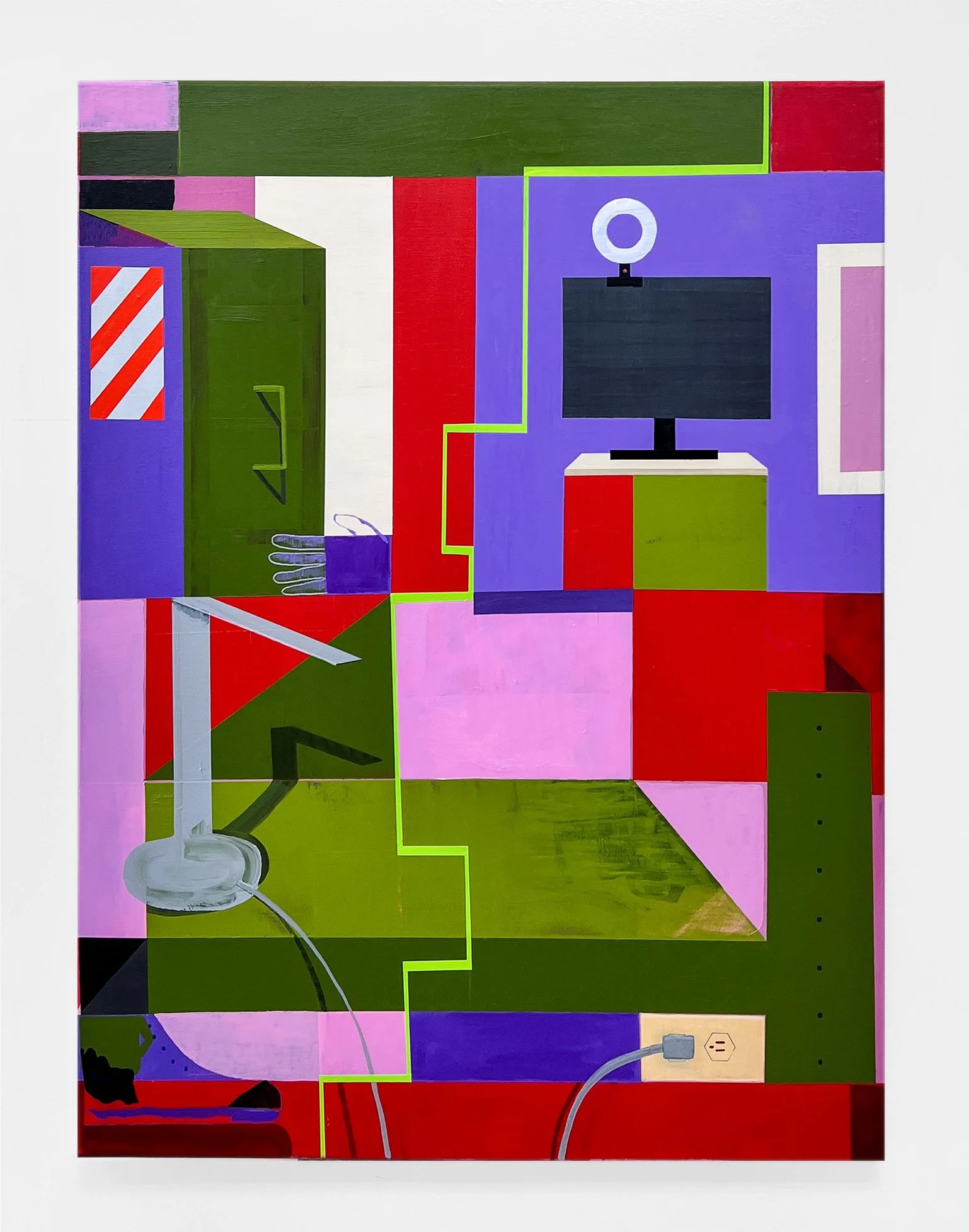
Feature Extraction, 2025
Acrylic and oil on canvas
40 x 30 in
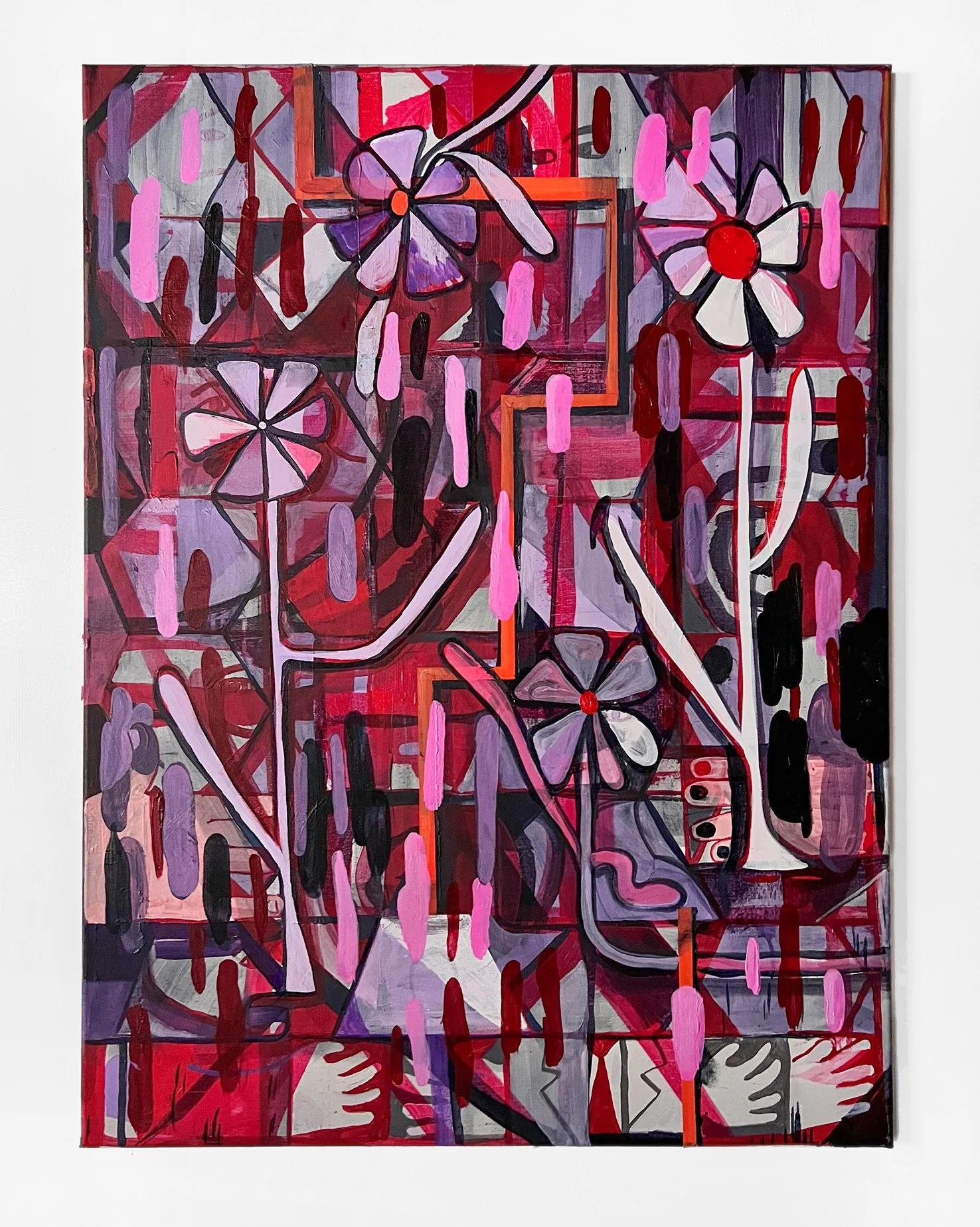
Dead Flowers, 2025
Acrylic on canvas
40 x 30 in
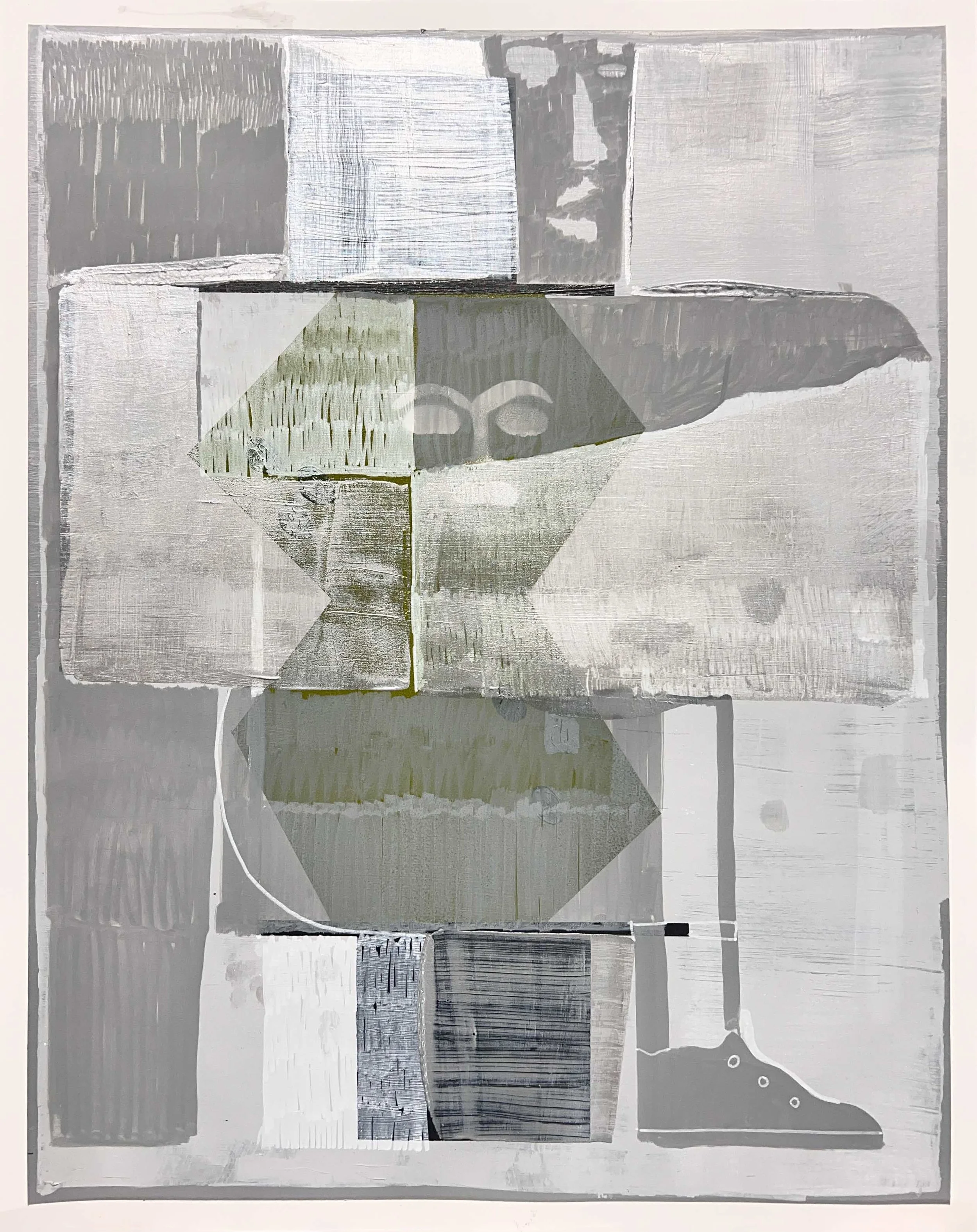
XRAY, 2025
Acrylic on Bristol paper
22 x 19 in
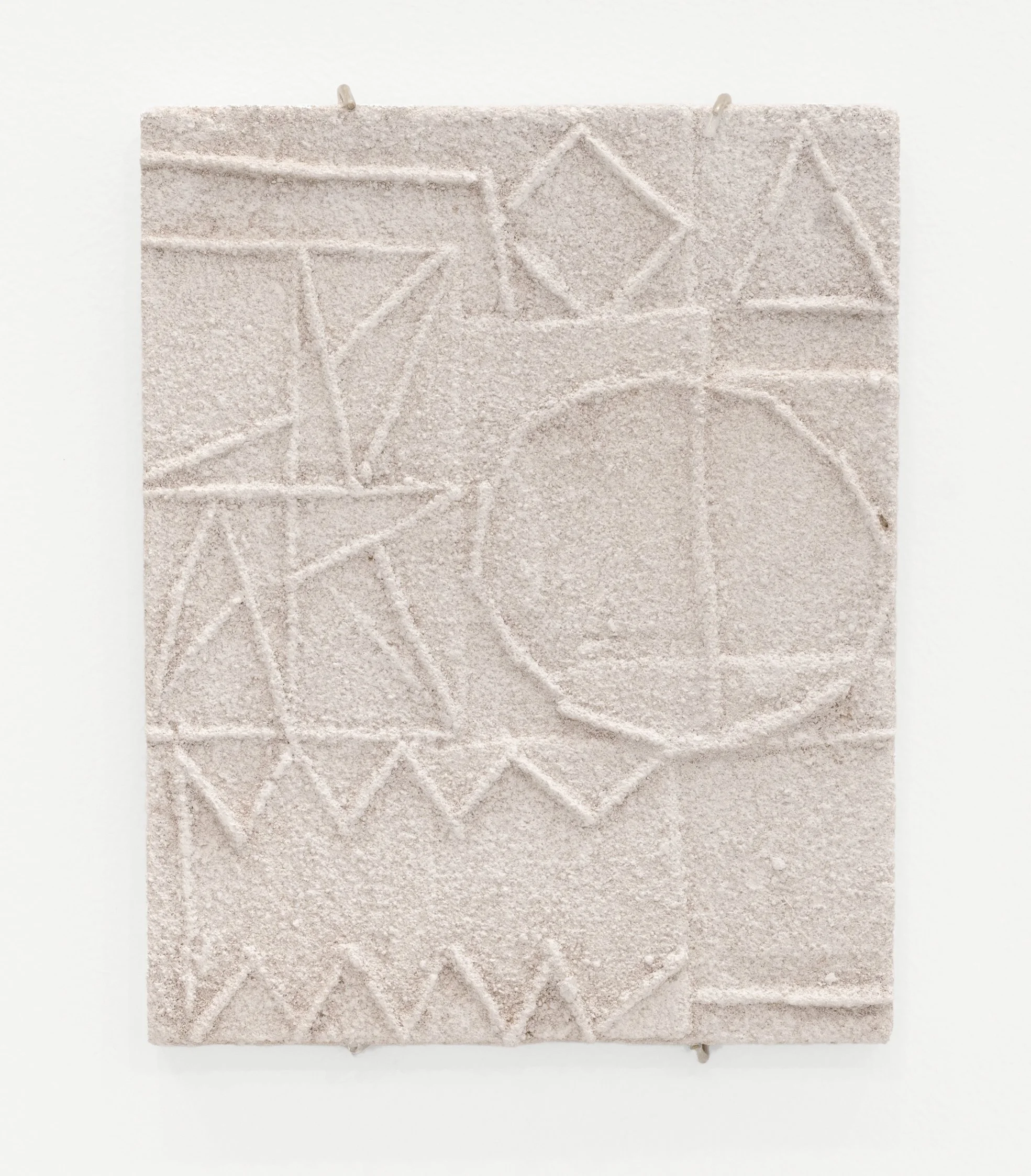
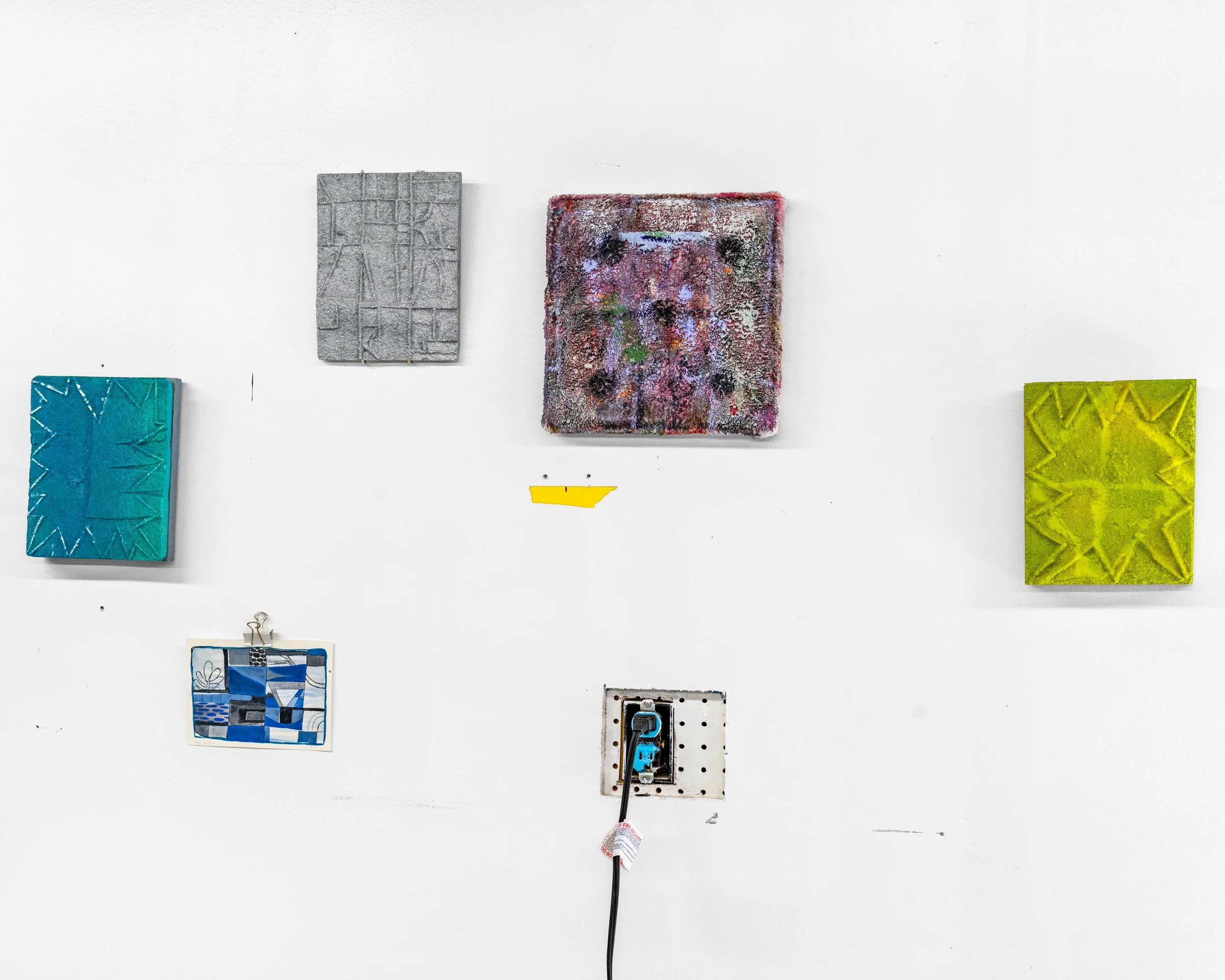
Demo Compilation, 2025
Sand-cast plaster and spray paint
8.5 x 7 in
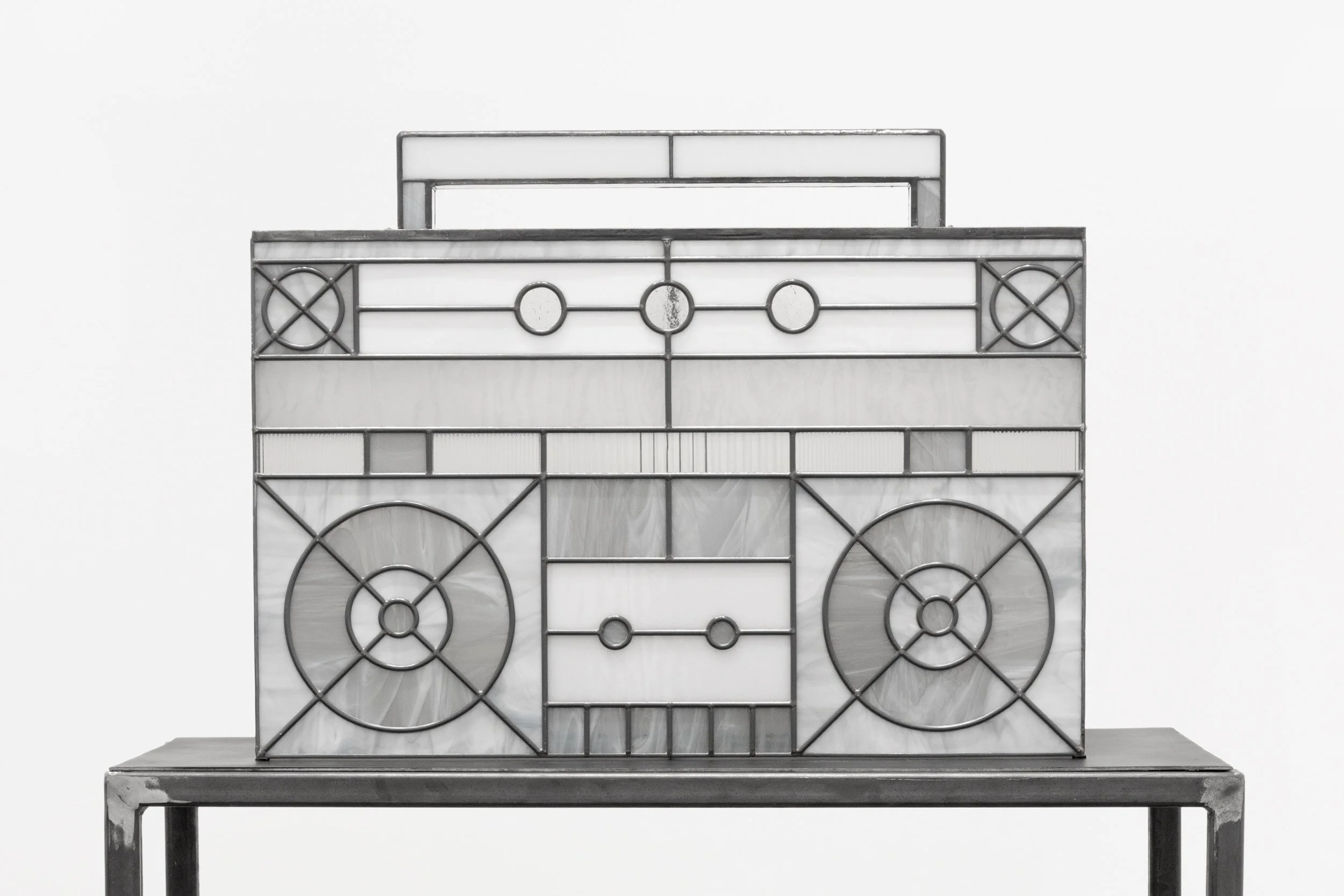
PAUSE II, 2025
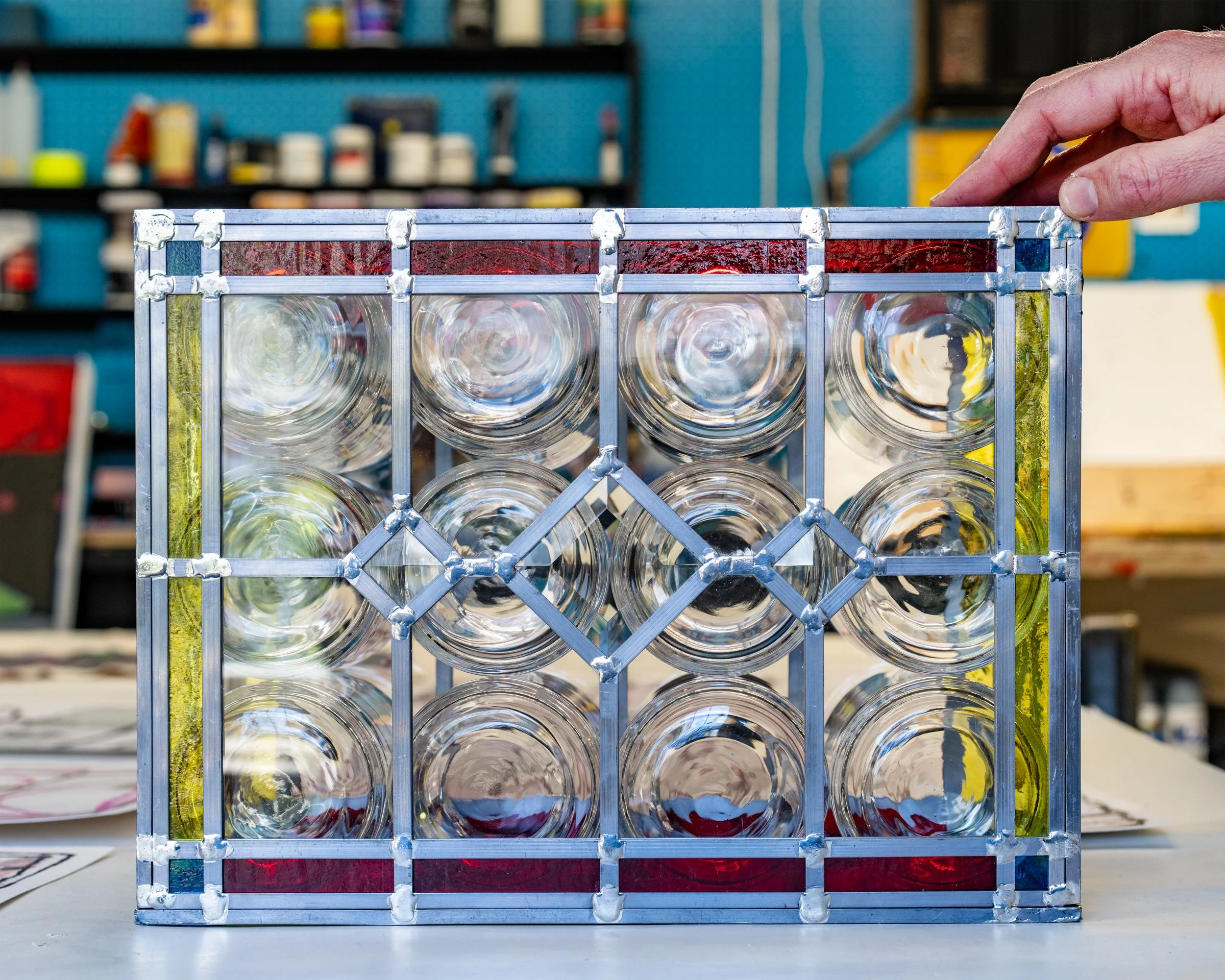
Stained glass
18 x 24 x 8 in
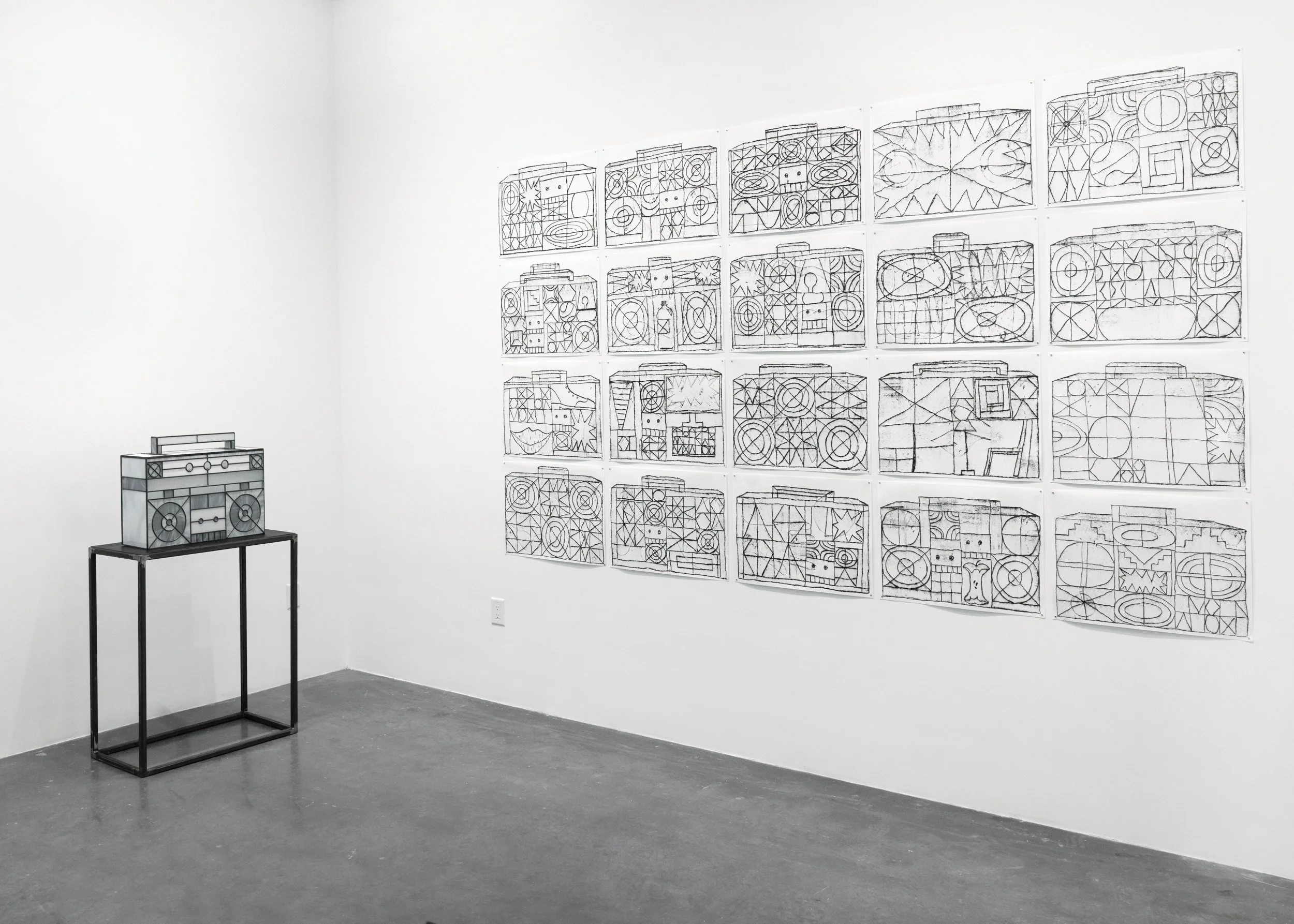
PAUSE Installation photo, 2025
Gallery OneOneOne, Chapel Hill, NC
Tell us a little about yourself and your history. Where are you from?
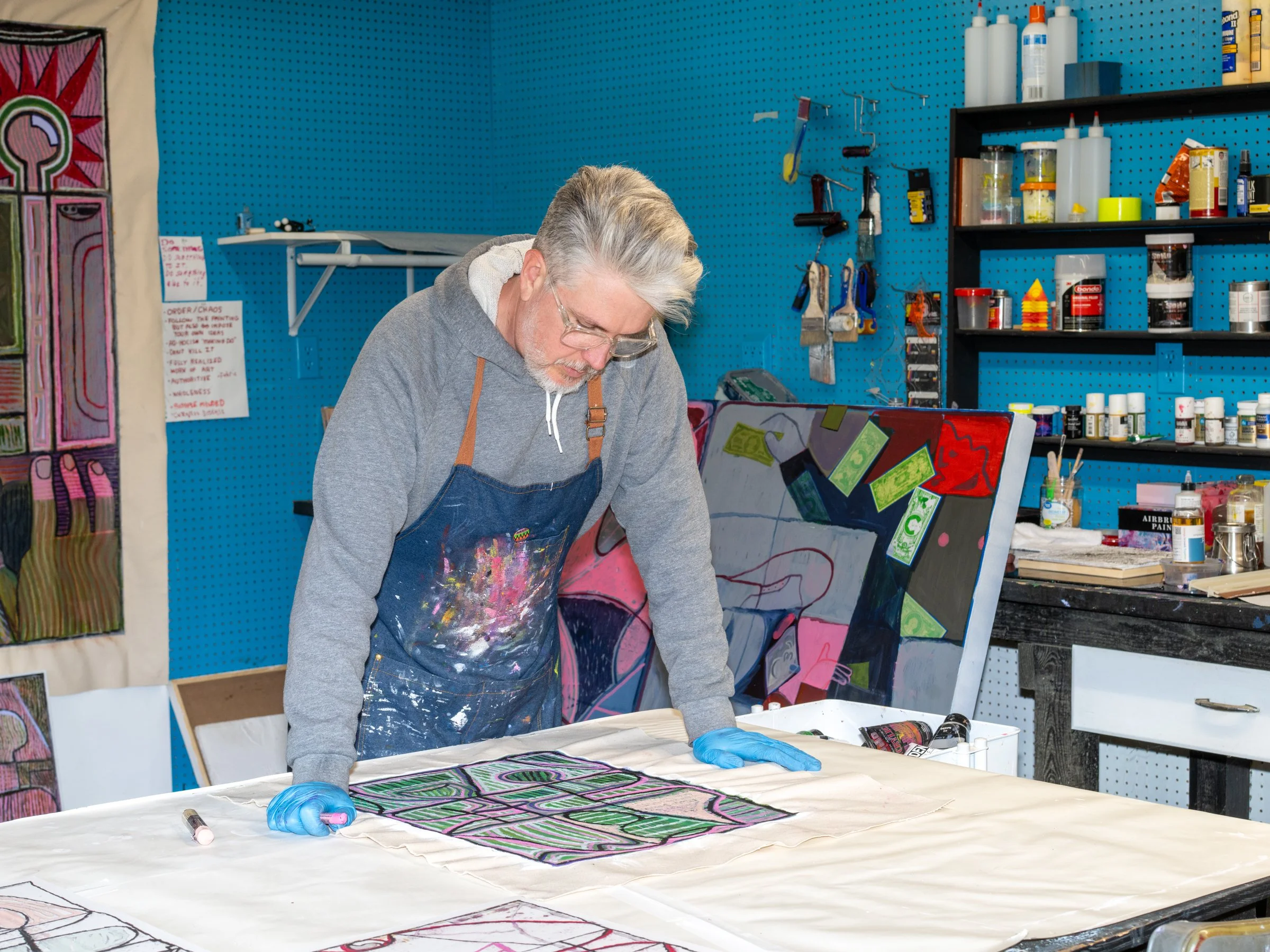
I was raised in Alabama, but am based in Winston-Salem. I've lived all over North Carolina with stints in Pittsburgh and New York. I originally moved here to study art at UNC-Chapel Hill and then stayed after finding a creative community of artists that felt like peers.
Was art - either in practice or exposure - a part of your childhood? Or did you come to it later in life?
I was always drawing. I loved blank typing paper and ball point pen – that was my medium. I drew rappers, designs for Nike shoes, weird characters – kid stuff. I didn't know anything about art, but I did know about crafting. My grandmother made floral arrangements with artificial flowers for her church. I would watch her working and she would talk to me about the decisions she was making when placing flowers. It was an early lesson in formalism. She would add a blue flower to balance out the white flowers on the other side, like a composition. Later I took an art class at the local shopping mall and learned more about art history and began painting. I found painting was a way to shut out the outside world and zoom in on what I was building.
What are some of your core interests or passions? And do these inform the art you make, or are there things you like to keep separate (or apart) from your creative practice?
I wake up thinking about drawings or a specific problem with a painting I need to resolve. At night I'm looking about exhibitions, reading books related to my research or biographies of artists. I don’t know where this fits in, but I have a deep love and appreciation for archaeology. I find it calming to learn about ancient cultures and the traces they leave behind.
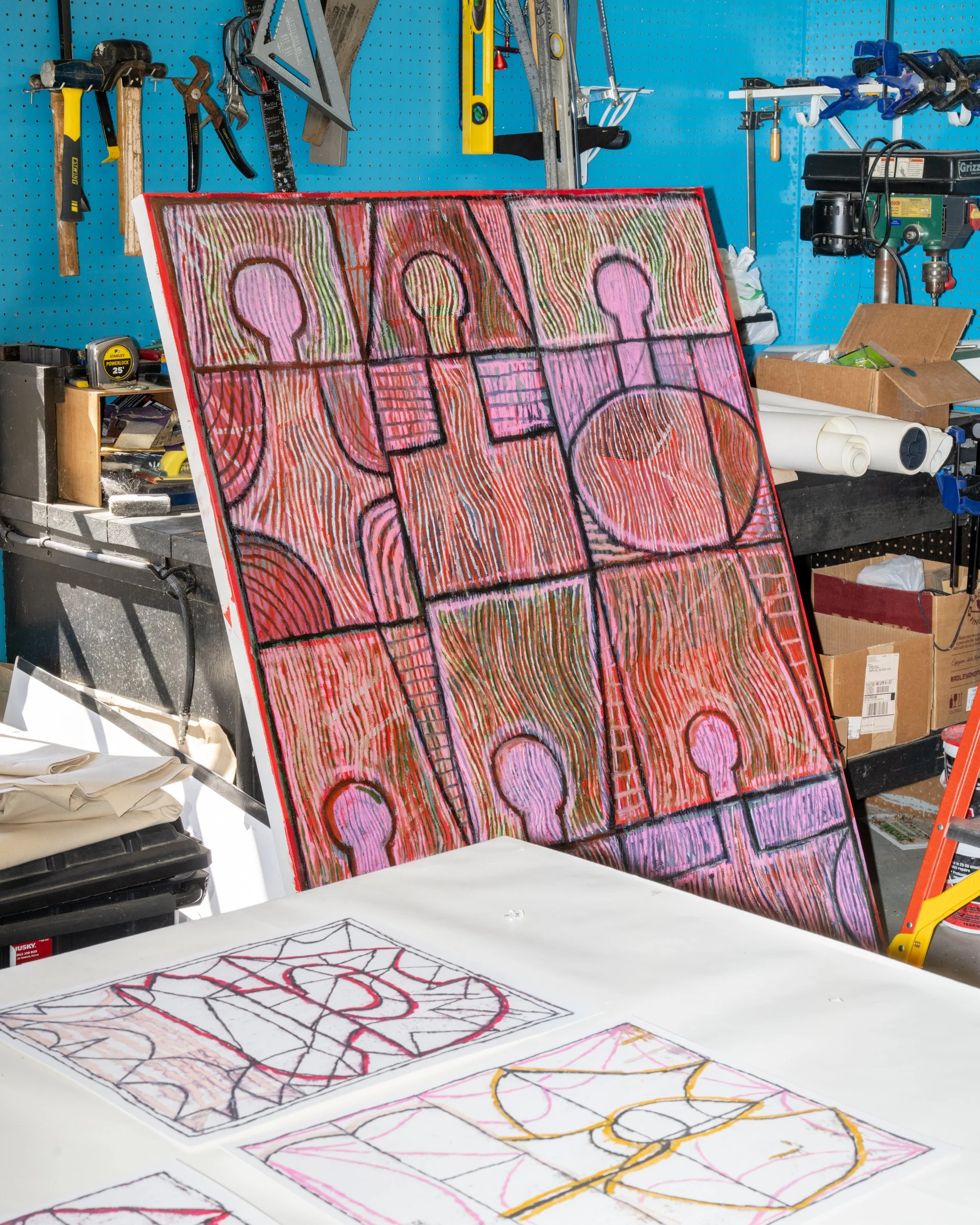
One of the things that fascinates me about your work is the fluidity between image and object—where structure, surface, material, and imagery all seem to carry equal weight. How do you approach moving between media, and how does materiality function conceptually as you shift between drawing, painting, sculpture, and constructed forms?
I view material and visual experimentation in the studio is a valid form of research in it’s own right. I’m interested in the space between different mediums and how forms translate from one to the other. There are gains and losses along the way and they inform one another. The work is like cousins and I’m happiest with the work when they are all talking and getting along.
Following on from that, another tension I see in your work is between representation and abstraction. There’s something beguiling about the way your images seem to reveal and confound at the same time. How do you think about the relationship between abstraction and representation in your practice?
It’s a game of hide and seek. The overall work gains traction when the presence of a recognizable subject becomes embroiled in a larger dialogue with more abstracted visual language. I’m looking to strike a balance between literal references to everyday objects and abstraction, in the same way you might want to balance color and form or any other elements of a painting. I don’t see them as opposites. They coexist together in the same world and have equal footing.
Certain objects recur in your work—boomboxes, speakers, lamps, hands. Can you talk about how these repeated forms operate? Do you see them as cultural, symbolic, formal, or all of the above?
The objects I portray are generally the types of things that are designed to disappear. They give way to their function. Like a lamp–it’s really not meant to be the star of the show–it’s only a supporting actor. I view lamps as a kind of figurative presence, they give off energy, so to focus on ‘lamp-ness’ as a subject means to also find a way to obscure. The objects I bring together are more like conceptual kits rather than symbols but they do sometimes function diagrammatically. The repetition of these simple objects is how they become iconography and part of my vocabulary.
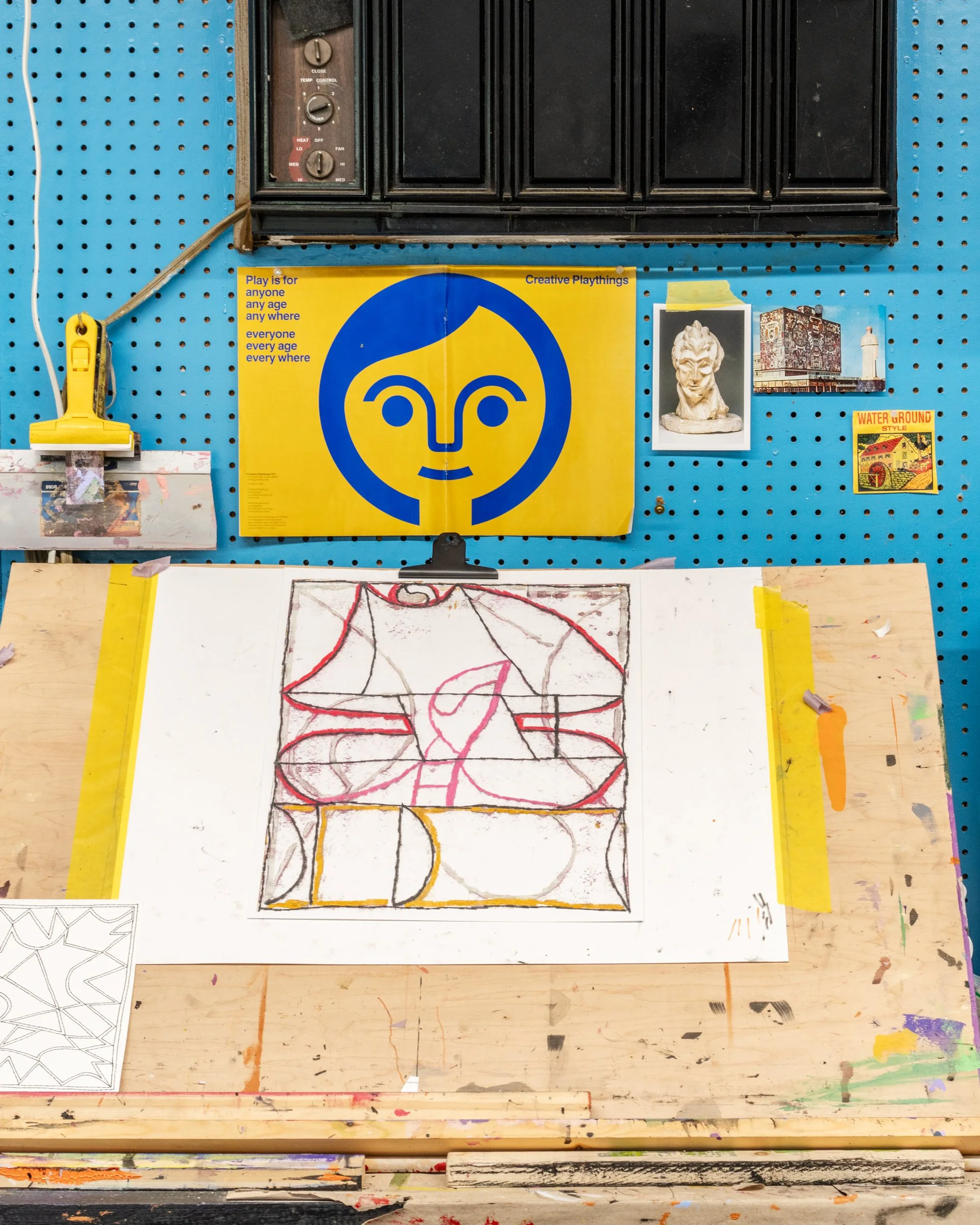
I love the term “slow objects.” In a technological culture that prioritizes speed, it feels like a subversive act to make work that invites pause. How do you think about this in your practice? Is it rooted in a kind of perceptual slowing down?
The slowness is just part of being an artist from Alabama and making work here in the South. That connection resonates for me conceptually and it becomes a lens to view the world through. I see art as a way to slow things down and create shared experiences. I see this playing out in the boombox drawings, sculptures and the influence of quilts in the structure of my drawings. Radios and quilts are storytelling platforms that create space for communal understanding.
Who are some artists, writers, or thinkers who have most shaped the way you think about your work? And is there anyone you’re especially excited about right now?
I’m energized by the artists around me in North Carolina who continue to raise the bar. That dialogue feels important to my work. I’m also part of frequent conversations with artists based all over the states and in places like Finland. I saw two exhibitions in Helsinki a few months ago that were focused on a material-based approach to making and both of these shows had a big impact on me and my thinking.
What is your studio soundtrack?
The best is when it's raining and the door is open to the studio. I turn on NTS often and other times I need silence. I find that podcasts are too absorbing to listen to while working unless I’m just cleaning up or doing something I can be distracted by.